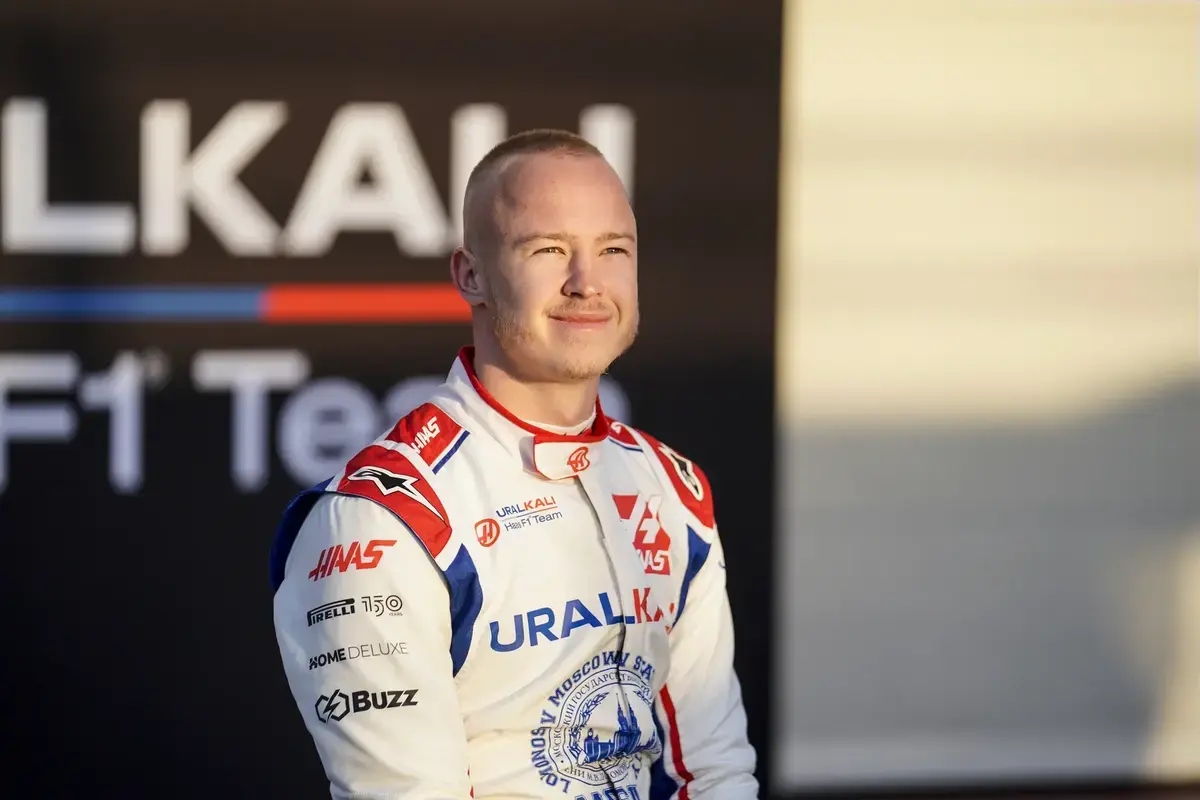

Nikita Mazepin is racing again, and he wasted no time reminding everyone why Haas signed him in the first place. Pole position by over four seconds in his GT3 debut at Spa-Francorchamps is not a bad way to announce yourself after four years in the wilderness. The bigger story, though, isn’t the lap time. It’s the FIA quietly rewriting a rule it once insisted was non-negotiable.
The Ban That Wasn’t Really a Ban
Back in 2022, Mazepin was dropped by Haas just weeks before the season started, taking his Uralkali sponsorship money with him, after Russia’s invasion of Ukraine made his presence on the grid politically toxic. Russian and Belarusian drivers weren’t outright banned from motorsport, but they were forced to compete as neutrals, stripped of flags, colours and anthems, and made to sign a neutrality pledge if they wanted to race at all. It was presented as principled. It always looked more like a PR exercise dressed up as policy.
Now the FIA World Motor Sport Council has decided the exercise has run its course. Its statement was suitably bureaucratic: “After consultation, the WMSC decided that the FIA emergency measures shall be revised to lift the restrictions on the participation of Russian and Belarusian drivers, national teams, individual competitors and officials, as well as those relating to the display of their national symbols, colours, flags and anthems.” Translation: the neutrality pledge is gone, the flags are back, and nobody at the FIA seems keen to explain what specifically changed to justify the timing.
Mazepin’s Long Way Back
For Mazepin himself, this has been a four-year exile from anything resembling mainstream competition. His F1 career was one uncompetitive season with Haas in 2021, spent almost entirely at the back alongside Mick Schumacher, missing the season finale after catching COVID-19. A 14th place in Azerbaijan was as good as it got. He picked up some GT mileage in the years since, at the 24 Hours of Dubai and in the Asian Le Mans Series, but nothing on the scale of a proper GT3 campaign.
This weekend at Spa, driving for Team Motopark in the Spezial Tourenwagen Trophy, marks his first real crack at the category. Given he’d already tested with the team at Spa and the Lausitzring, the pole doesn’t come entirely out of nowhere, but four seconds clear of the field is still a statement. Whatever else people want to say about Mazepin, the man can drive. That was never really the argument against him.
He’s Not the Only One
Mazepin isn’t racing in isolation this weekend either. Rinat Salikhov is also back in action, competing in the GT World Europe series at the Nürburgring. Between the two of them, it’s clear the FIA’s policy shift isn’t a one-off accommodation for a single driver with a famous surname and an even more famous ex-sponsor. It’s a genuine reopening of the door, and other Russian and Belarusian competitors will presumably follow through it in the coming months.
The Politics Nobody Wants to Touch
The FIA will insist this is a straightforward administrative update, nothing more. Nobody actually believes that. Rules introduced in response to a war don’t get quietly reversed without someone, somewhere, deciding the optics have shifted enough to allow it. Whether that reflects genuine diplomatic movement or simply governing-body fatigue with policing nationality on an entry list is anyone’s guess, because the WMSC statement offers precisely zero insight into the reasoning.
What it does confirm is how flimsy the whole neutrality framework was to begin with. A driver signs a piece of paper promising not to wave a flag, and that’s supposed to represent some kind of moral stand? It never did much beyond giving broadcasters an easy line to repeat and giving the FIA a way to look like it was doing something without actually taking a position on anything.
What Happens Next
Don’t expect Mazepin back on an F1 grid any time soon. There’s no seat, no obvious pathway, and Formula 1’s current driver market, already stuffed with contract uncertainty as detailed in this look at the sport’s looming contract chaos, has bigger names than his fighting for fewer seats. GT racing is a perfectly respectable place for him to rebuild a career, and on this evidence he might do rather well at it.
But the manner of his return says more about the FIA than it does about him. An organisation that spent four years treating national identity as a competitive liability has now decided, without much explanation, that it isn’t anymore. Whether that’s progress or just governance by convenience depends entirely on how cynical you’re feeling. Given the FIA’s recent form, cynical feels like the safer bet.