
Cadillac wants you to believe swapping team bosses mid-season is just sensible evolution. Strip away the corporate language, though, and what actually happened is that a floundering car with a habit of catching fire got its boss fired, and the replacement has spent his first weeks quietly admitting the whole debut project was held together with tape and good intentions.
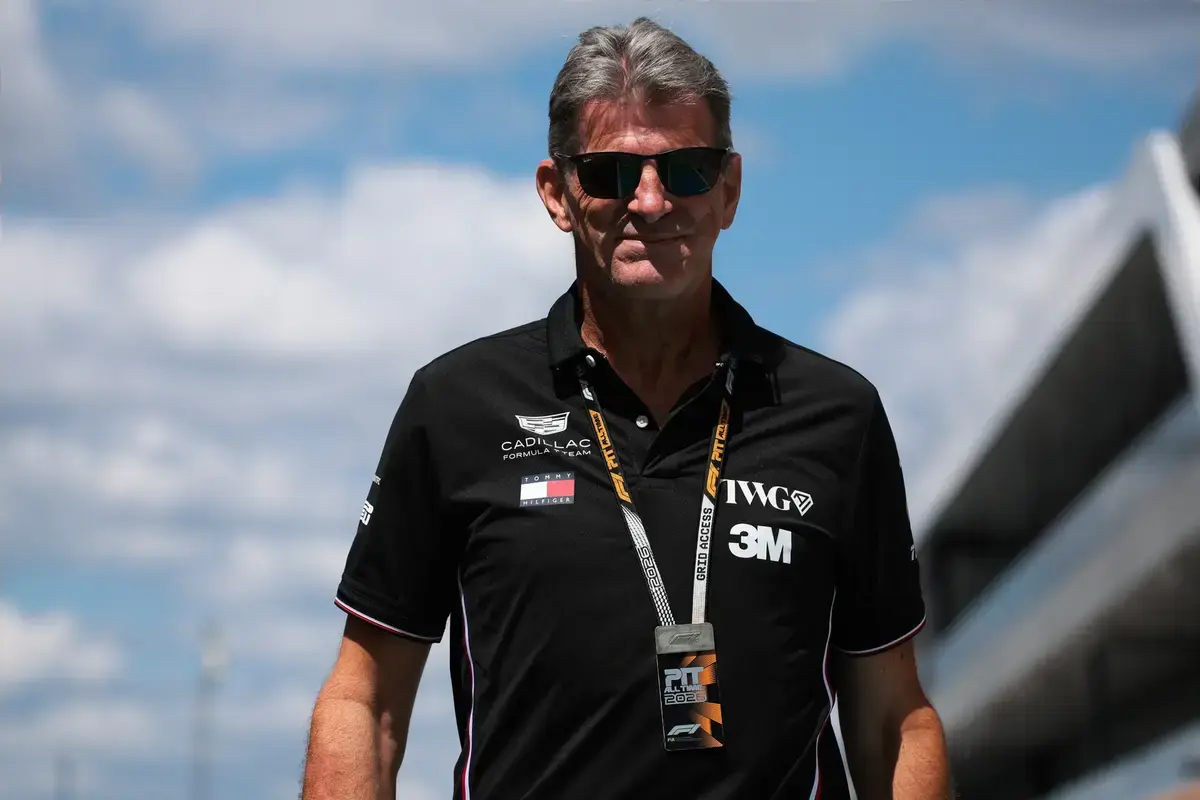
Graeme Lowdon is out. Marcin Budkowski is in. The timing, just before the Dutch Grand Prix and with barely a whisper of warning, tells you everything about how these decisions actually get made in this sport: quickly, coldly, and usually with a PR line about ‘exciting new chapters’ bolted on afterwards.
A Sacking Dressed Up as a Handover
Cadillac’s official story is tidy enough: Lowdon built the team from nothing, got it to the grid, and now it’s time for someone more technical to take it to the next level. Fine, except that’s not really how sackings tend to look from the inside. According to PlanetF1.com, sources at Zandvoort indicated Lowdon was simply too business-focused to get on top of the technical mess that had plagued Cadillac’s first half-season, most notably brake failures and a small fire on Valtteri Bottas’ car in Hungary that would have been embarrassing for a team in its tenth season, let alone its first.
Lowdon’s background is engineering, but his most recent job in F1, at Manor Marussia, was pure CEO territory. With Dan Towriss already occupying that seat at Cadillac, there was nowhere else to shuffle Lowdon to. So he was simply removed. Head of communications Lucy Genon went at the same time, and Towriss’ own PA was let go shortly before that, for reasons nobody’s bothering to explain. When the cleaning starts, it rarely stops with one desk.
Budkowski’s Diplomatic Way of Saying It Was a Mess
Whatever you think of Budkowski, the man doesn’t dodge a question, even if he wraps the answer in enough diplomatic padding to soften the blow. Speaking to media including PlanetF1.com, he praised what Lowdon achieved building a team from scratch, before immediately explaining why it wasn’t good enough.
“These guys have gone to war, and the decisions you make in wartime are different to the decisions you make in peacetime. I think if they had three years instead of one to do it, they would have done it a little bit differently.” – Marcin Budkowski
Translation: the MAC-26 was rushed, shortcuts were taken, and some of those shortcuts are now actively fighting the team. That’s a polite way of confirming what anyone watching Cadillac’s reliability record already suspected.
The Brake Problem Nobody Has Actually Fixed
Budkowski didn’t sugarcoat the ongoing brake saga either, describing it as a “cascade” of failures rather than one clean fix-it-and-move-on issue.
“There have been some mistakes made in terms of design and materials. It’s an unlucky chain of events in a way because the brake failures are not a single source of failure. When you fix one thing, something else goes wrong, and you learn as you do it.” – Marcin Budkowski
That’s not exactly the language of a team on top of things. It’s the language of a team still finding out what’s broken, several race weekends after those problems first started costing them mileage and, by extension, the data every new outfit desperately needs. Cadillac currently sit bottom of the constructors’ championship without a point to their name, and reading between Budkowski’s lines, that’s not a huge surprise.
Blaming Lowdon While Praising Him in the Same Breath
There’s something almost uncomfortable about how carefully Budkowski frames his predecessor’s shortcomings. He talks up Lowdon’s “immense admiration and respect,” then explains, in the next breath, that Lowdon apparently resisted help from General Motors’ wider technical resources, a reluctance said to have frustrated Towriss. If true, that’s a fairly damning detail for a team boss whose entire job, in theory, was to make full use of a parent company with genuine engineering muscle behind it.
It also raises an obvious question: if Cadillac had access to GM’s expertise all along, why did it take a change of leadership to actually use it?
The ‘Centre of Gravity’ Spin
Cadillac loves talking about shifting its “centre of gravity” to the new Fishers facility in Indianapolis, and Lowdon, before his exit, was adamant this wasn’t a weakness but a recruitment advantage. Whether that survives contact with reality is another matter. The established F1 talent pool overwhelmingly still lives in the UK’s so-called Motorsport Valley, and asking European engineers to relocate across the Atlantic is a tougher sell than Cadillac’s press releases suggest, no matter how shiny the new 450,000 square foot Indianapolis base ends up being.
Budkowski, for what it’s worth, seems to be threading a more balanced line: concept design stays in the UK, rapid-response manufacturing stays in the UK, and the bulk manufacturing shifts to America “reasonably soon.” Sensible enough, though it’s worth noting this is roughly what Pat Symonds was already saying about Cadillac’s plans, a sign that the strategic direction hasn’t actually changed, just the man in charge of executing it.
A Familiar F1 Story
None of this is unique to Cadillac. New teams historically arrive with ambition, hit a wall of reliability problems nobody predicted, and then quietly restructure once the shine wears off. What’s notable here is how quickly it happened, and how openly Budkowski has been willing to admit the car was, in his own words, “even more of a prototype” than anyone let on publicly.
Cadillac’s American ambitions remain the most interesting subplot in the sport right now, more interesting arguably than anything happening at the sharp end of the championship, where Mercedes continue to dominate. But ambition and execution are different things, and right now Cadillac’s execution has cost a popular team boss his job less than a season into the project. Whether Budkowski fares any better remains to be seen, though given he’s already admitting to shortcuts, wartime decisions and cascading brake failures within weeks of arriving, at least nobody can accuse him of overselling it.
The Bottom Line
Cadillac wants this framed as a natural handover from the builder to the refiner. It reads more like a team quietly conceding its first season was held together by good intentions and hurried engineering, and that somebody had to take the fall for it. Lowdon built the plane while flying it, to use his own metaphor. Turns out the wings needed more than duct tape.