
Red Bull spent last weekend basking in the glow of Max Verstappen’s shiny new contract, extending his stay until 2030 and putting a lid on months of will he, won’t he speculation. Bernie Collins isn’t buying the finality of it for a second.
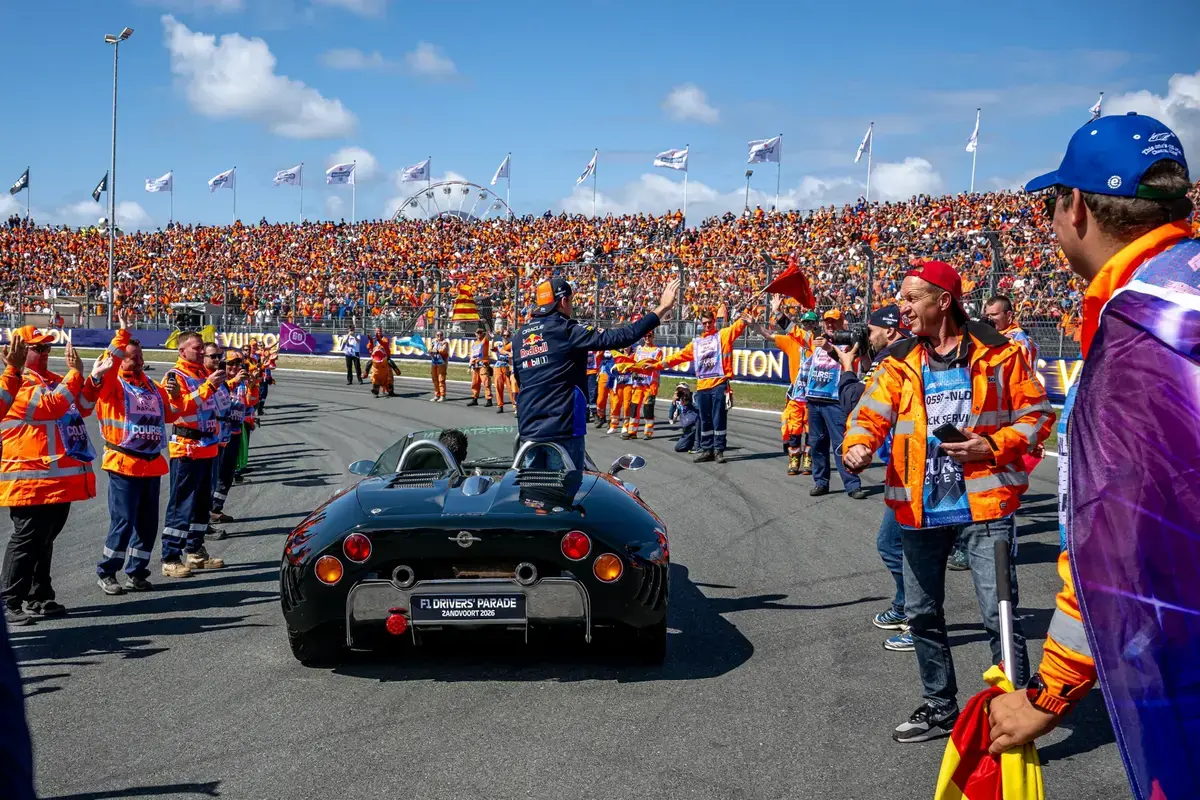
Verstappen agreed to stay with Red Bull until at least the end of 2030 ahead of the Dutch Grand Prix, ending talk of a McLaren switch or even retirement. That’s the headline everyone’s already read. What matters now is the small print, and according to the former F1 engineer, that small print is doing a lot of quiet work.
There’s Always a Door Marked Exit
Speaking on the Sky F1 podcast, Collins didn’t mince her words about what these long-term deals actually contain once the champagne has gone flat.
“Any contract, there’s always a way out. Especially for a team and a driver, if the driver doesn’t want to drive, if Max decides he doesn’t want to drive and he wants to leave, there is no point in keeping them.” – Bernie Collins
That’s not cynicism for the sake of it, as reported by RacingNews365. It’s basic logic. Red Bull isn’t paying a four-time world champion an eye-watering salary to sulk around the garage half-committed. Collins makes the point plainly: if the relationship sours, keeping him tied down on paper achieves nothing for either side.
“You’re not going to get the best out of them, and you’re paying them an extortionate amount of money to not get the best out of them. The contract will 100 per cent have a written-in clause to get out of it.” – Bernie Collins
Note the confidence there. Not “probably.” Not “might.” A flat “100 per cent.” Collins isn’t speculating about whether an escape hatch exists, she’s telling you it’s a given in a deal of this size and profile.
Money Talks Louder Than Ink
Verstappen’s previous contract also carried an exit clause, one that reportedly could have let him walk at the end of this season if he’d fancied it. He didn’t use it. But Collins points out that the existence of a clause is almost secondary to the far blunter reality underneath it.
“We all know that the world revolves around money. So, if Max wants to get out, or another team wants him, there will be a number that can make that happen for 2030 regardless of what’s written in the contract.” – Bernie Collins
Read that again. It doesn’t matter what Red Bull’s lawyers typed up. If a rival wants Verstappen badly enough, or if Verstappen himself decides he’s had enough, a cheque gets written and the paperwork becomes wallpaper. Contracts in Formula 1 aren’t chastity belts, they’re negotiating positions with a starting price.
Commitment, but Not the Unconditional Kind
To be fair to Collins, she doesn’t dismiss the deal as meaningless theatre. She’s careful to acknowledge it as a genuine signal, just not an unconditional one.
“I know we put a lot of emphasis on it, and it is a good sign of his commitment to the future. But all of these things, there’s always a way out.” – Bernie Collins
And then comes the line that should worry anyone who thinks this saga is finally closed:
“If he’s not happy next year, if he doesn’t see the sport going in the right direction, or he doesn’t see the engine improvements making a difference, he still has the ability to walk away from that.” – Bernie Collins
That’s three separate conditions, any one of which could reopen the whole conversation. The sport not moving in a direction he likes. The engine gains failing to materialise. Simple unhappiness. Given how vocally Verstappen has criticised the 2026 rules already, and given Red Bull’s ongoing engine ranking headache with its new Ford partnership, none of those three boxes looks remotely close to being ticked with certainty.
Why This Matters More Than the Headline Suggests
Formula 1 CEO Stefano Domenicali couldn’t have been happier when the news broke in Zandvoort, calling it a “cherry on the cake” and insisting he “cannot see Formula 1 without” Verstappen. Verstappen himself admitted he’d been closer to retiring than switching teams earlier in the season, before deciding, in his words, to “accept the situation” and make the best of it.
None of that is in dispute. What Collins is really doing is puncturing the framing that’s followed the announcement everywhere, the idea that this is somehow a done deal, a line drawn under the speculation, a guarantee of five more years of Verstappen in a Red Bull cockpit. It isn’t. It’s a contract with an escape hatch built in as standard, because that’s how contracts work at this level, and because Red Bull knows perfectly well that trying to trap an unhappy four-time champion would be commercially and competitively pointless.
The Cynical Read
Strip away the PR glow and what you’re left with is this: Verstappen has bought himself time, Red Bull has bought itself a headline, and absolutely nobody has bought certainty. If the new engine regulations keep disappointing, or if a title fight with Kimi Antonelli and the rest of the Mercedes-powered field starts to look permanently out of reach, don’t be shocked if “2030” quietly becomes “whenever suits Max.” Collins has simply said out loud what everyone in the paddock already assumed. Contracts are comfort blankets, not chains, and the moment this one stops suiting Verstappen, there will be a clause, and a number, waiting to end it.