
Max Verstappen just said goodbye to Zandvoort in the way only he could: equal parts sentiment and brutal self-assessment. One paragraph thanking the fans who turned his home race into a national holiday, another admitting his first-lap crash could have collected half the grid. Typical Max, really. Even his farewells come with a safety briefing.
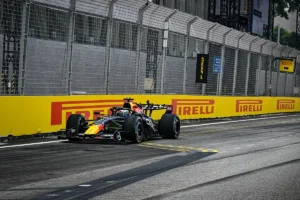
Verstappen crashed out of the final lap-one corner of the final Dutch Grand Prix on this calendar, ending his home farewell early after starting seventh. He’s since been picked apart by the world’s media for the mistake, but that’s not really what he wanted to talk about afterwards. What he wanted to talk about was Zandvoort itself, and the seven years that got the sport back there in the first place.
A goodbye note written for the fans, not the stewards
Within hours of the red flag, Verstappen posted a message on Instagram that read less like a driver’s statement and more like a eulogy for a venue that gave him, and by extension the whole of Dutch motorsport, something it hadn’t had in 36 years.
“Zandvoort. I’m incredibly proud of what we’ve had here. What once seemed impossible became something really special. It means a lot that I got to be part of it. I’ll always remember this. Thank you.” – Max Verstappen
No mention of the crash. No mention of the stewards, the wet patch, or the fact he’d just binned his RB22 into the barriers in front of a grandstand full of orange. Just gratitude, and a quiet acknowledgement that something genuinely improbable is coming to an end. F1 returned to the Netherlands in 2021 largely because a kid from Hasselt was tearing up the championship order, and now that same driver is watching it leave the calendar with his contract extension freshly signed through 2030, a deal that isn’t quite as watertight as Red Bull would like people to believe, but that’s a different headache for a different day.
The financial reality nobody wanted to say out loud
Zandvoort’s organisers didn’t walk away from Formula 1 because they fancied a change of scenery. The privately funded event simply couldn’t make the long-term numbers work, and rather than limp on with a shrinking budget and a shakier future, they chose to let the contract lapse after this season rather than negotiate an extension. It’s the unglamorous truth behind most farewell tours in this sport: it’s rarely the fans who stop wanting it, it’s the accountants who stop being able to justify it.
That context makes Verstappen’s message land differently. This wasn’t a case of F1 abandoning a market that had gone cold. Zandvoort was packed, loud, and unapologetically Verstappen’s for five straight years. It’s simply that popularity and profitability aren’t the same thing, and Formula 1’s calendar economics have never cared much for sentiment.
The crash he can’t quite leave out of the story
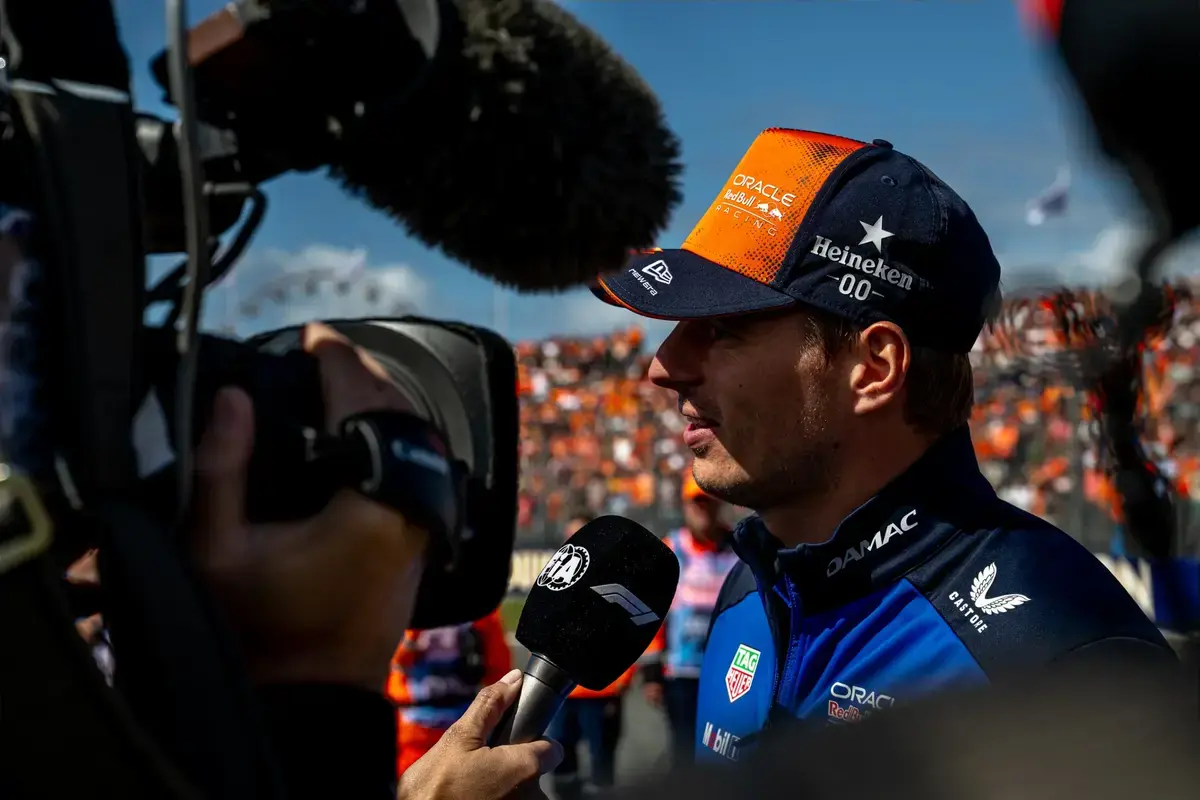
Whatever warmth Verstappen showed the fans afterwards, he was refreshingly blunt about his own part in ending the race early. Speaking to Sky Sports Germany, he didn’t hide behind track conditions or bad luck alone.
“In the last corner, it was obviously still a bit wet. But in the end, I thought, ‘OK, now there’s a bit of a dry line.’ And then, of course, I accelerated, but still had no grip. And that was quite a heavy impact, but everything is OK. It’s obviously a pity, but generally speaking, I’m just a bit disappointed because we were simply too slow the entire weekend.” – Max Verstappen
That last line is the sort of thing that gets lost under the wreckage footage: Verstappen wasn’t just annoyed about a wet patch catching him out, he was frustrated that Red Bull simply didn’t have the pace to be fighting further up all weekend. Sixth in the sprint was scant consolation, and starting seventh on a day this significant was never part of the script he’d written in his head.
How close it came to being much worse
The bit that should worry Red Bull more than the points he lost is that the car bounced back onto the racing line after the initial impact, with the field still bunched together on lap one. Several drivers, including Lewis Hamilton, Lando Norris, Yuki Tsunoda, Arvid Lindblad and Pierre Gasly, immediately asked over team radio whether Verstappen was okay. Liam Lawson, running right behind him, got closest to the drama and didn’t hide his alarm on the radio either. According to Dutch outlets, the car bounced back onto the racing line after the initial impact, with the field still bunched together on lap one—a situation Verstappen later acknowledged could have ended much worse given how many cars were behind him.
The theories nobody at Red Bull will confirm
Ralf Schumacher offered a more sympathetic read on the podcast Backstage Boxengasse, suggesting a driver who habitually pushes to the absolute limit, especially in mixed conditions, is precisely the type who gets caught out when a patch of track behaves unpredictably. He also floated frustration with the car’s overall pace as a contributing factor, not an excuse but a piece of context that fits neatly with Verstappen’s own post-race comments about being “simply too slow the entire weekend.”
An ending that suits nobody’s script perfectly
There was always going to be pressure on this weekend to deliver a fairytale, one last home hero moment before the Dutch Grand Prix disappears from the calendar. Instead it delivered a wet corner, a heavy shunt, and a message on Instagram that did more emotional heavy lifting than the race itself managed. Fitting, in a strange way, for a sport that increasingly seems to save its most human moments for social media rather than the podium.
Zandvoort gave Verstappen five years of guaranteed chaos and adoration in equal measure. It leaves the calendar with him thanking it for exactly that, crash included. Whether Formula 1 ever finds its way back there again is anyone’s guess, but don’t hold your breath waiting for the accountants to change their minds.