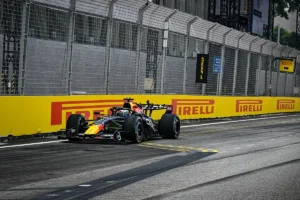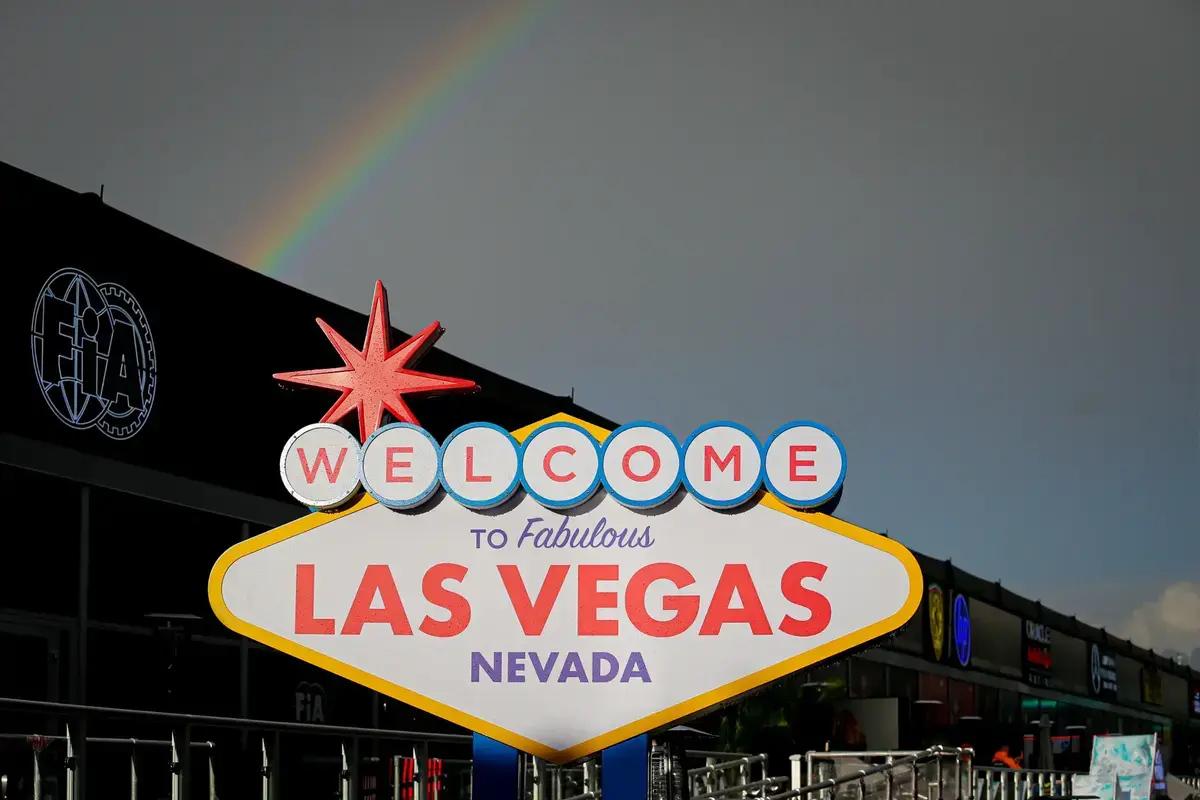

For a brief, delicious moment, it looked like Formula 1 might actually do something bold: two Grands Prix in Las Vegas on the same weekend, Formula E style, roads closed and lights blazing on both Friday and Saturday. Then reality, and a room full of nervous team bosses, intervened.
The idea resurfaced during the Dutch Grand Prix weekend as speculation swirled about what happens if the season’s final two rounds in Qatar and Abu Dhabi become untenable. It’s a fair question. The United Arab Emirates confirmed last week that Iran had launched two ballistic missiles towards its territory, hardly the kind of headline that inspires confidence in hosting a championship-deciding street race a few months later.
Why Vegas Made Sense on Paper
The logic wasn’t daft. Las Vegas already gets the full song and dance treatment for its night race, with infrastructure built, roads shut and a promoter, FOM itself, that controls the event outright rather than dealing with a third-party organiser. Slotting in a second full race weekend of practice, qualifying and a Grand Prix on the Saturday, after doing the same on Friday, would have been a logistical shortcut compared to negotiating with an external host.
According to PlanetF1.com, Las Vegas GP chief executive Emily Prazer had even volunteered the event’s services to FOM as a fallback option should the Middle Eastern races need replacing. It’s the sort of proposal that sounds great in a boardroom slide deck and considerably less great once you remember that F1 teams have to actually build, ship and run two entirely separate race weekends with barely a day between them.
The Teams Said No, Politely and Firmly
Turning a wild idea into a real event needs approval at F1 Commission level, and given the short notice involved, that meant a supermajority vote. Sources across several teams indicated that support simply wasn’t there. Nobody wanted to say it loudly, but the appetite for cramming a second full-blown Grand Prix weekend into an already brutal calendar was apparently non-existent behind closed doors.
Stefano Domenicali reportedly met with team representatives at the Hungarian Grand Prix weekend to kill the idea quietly before it ever reached a formal vote, sparing everyone the embarrassment of watching it get shot down in public. Efficient, if a little sneaky. F1 loves nothing more than floating a headline-grabbing idea and then burying it before anyone can ask awkward questions about crew fatigue or freight logistics.
So What Happens to Qatar and Abu Dhabi?
With the Vegas fantasy dead, the contingency plan is now firmly rooted in Europe. Should Qatar and Abu Dhabi be scrapped, sources suggest Imola would host a replacement race on the scheduled Qatar weekend of November 27-29. It’s not glamorous, but it’s sensible: European weather in late November is a known quantity, teams wouldn’t need to schlep freight halfway across the world twice, and the season could wrap up closer to home before everyone decamps to Shanghai for the FIA’s prize-giving in December.
Domenicali has been careful not to sound alarmist, insisting that officially nothing has changed.
“That moment will not be before the middle of September. So, for us today, the races in Qatar and Abu Dhabi are confirmed. By the way, they are already sold out. That is an incredible sign of how much the sport is bigger than the problems that our world is living. But of course, if the situation is not cleared the way that we believe it should be before the middle of September, we will take the decision.” – Stefano Domenicali
Sold-out grandstands are nice, but they don’t count for much if the region is too volatile to safely host a race. F1 has form for prioritising commercial optics over uncomfortable truths, and pointing at ticket sales as proof that “the sport is bigger than the problems” feels a touch tone-deaf given what’s actually at stake.
A Season Still Finding Its Shape
This uncertainty lands at an awkward time. The championship battle is red-hot, with Kimi Antonelli leading Mercedes‘s title charge on 224 points ahead of Lewis Hamilton and teammate George Russell, while Max Verstappen continues to fight his way back into relevance after a difficult Zandvoort weekend that included a sprint that didn’t go his way, as detailed in our Dutch GP sprint report. The last thing this title fight needs is a chaotic scramble to reshuffle the calendar in November because nobody could commit to a decision in September.
Bahrain’s shift to Sepang already proves the calendar isn’t as fixed as F1 likes to pretend, and the Saudi Arabian Grand Prix has already fallen off entirely this year. Two more absences, or a hasty relocation to Imola, would confirm what many suspected all along: F1’s Middle East expansion was always more fragile than the glossy race-weekend build-up suggested.
The Bigger Picture
Domenicali’s insistence that a decision won’t come before mid-September is understandable from a business standpoint, nobody wants to spook broadcasters, sponsors or ticket holders prematurely, but it also means teams are being asked to plan freight, logistics and staffing around a calendar that could still change dramatically with barely two months’ notice. That’s not exactly ideal for an industry that already treats its workforce like they’re running a military campaign nine times a year.
Vegas was always the fun answer to a serious problem. Killing it off quietly suggests F1 knows exactly how serious that problem still is, whatever the sold-out grandstands in Qatar might suggest.