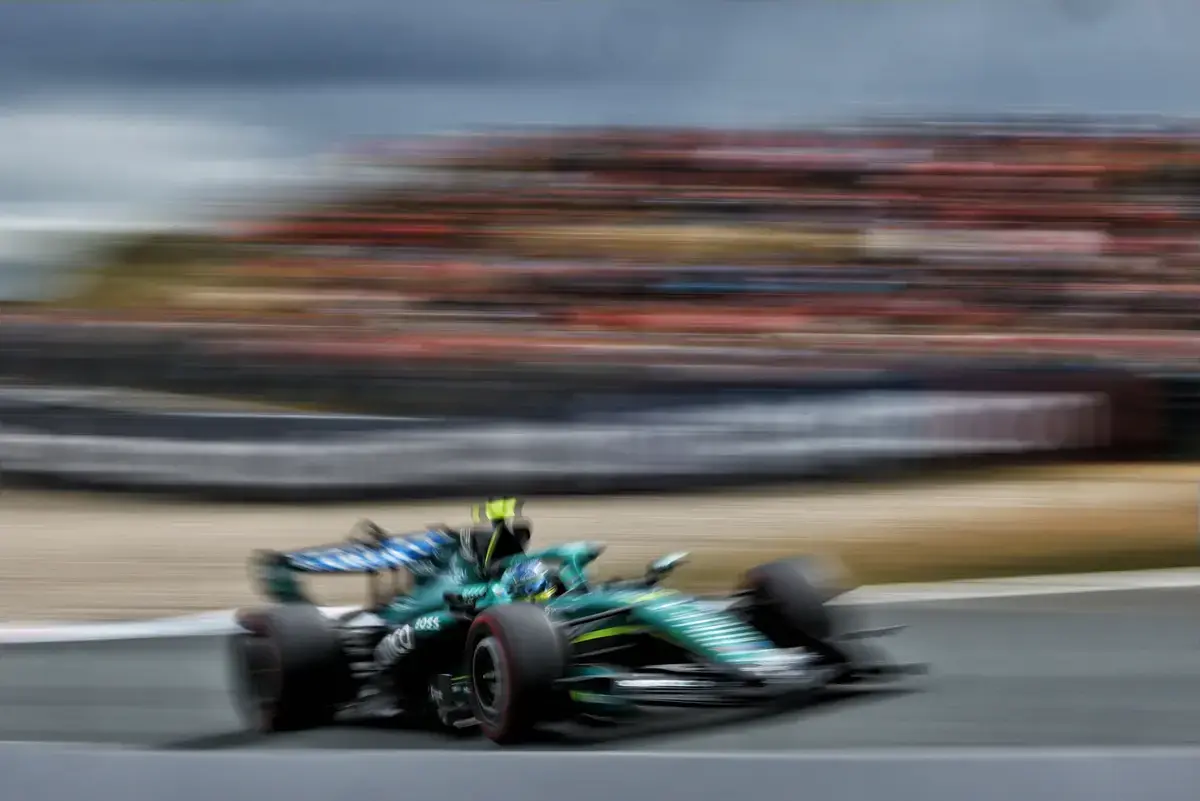

Fernando Alonso’s Zandvoort weekend has taken another twist. Aston Martin has fixed the mystery straight-line mode fault that wrecked his sprint qualifying, but the cure comes with a catch: the Spaniard will now start Saturday’s sprint from the pitlane.
Alonso already had a miserable sprint qualifying session, blaming an immature new Honda power unit and a rear wing that refused to open for a last-placed finish. That story has been told. This one is about what happens next, and why fixing a problem can sometimes leave you worse off on the grid than the problem itself.
Why fixing the car means starting from the pits
Because Alonso’s straight-line mode system, essentially Aston Martin’s version of DRS-adjacent low-downforce trickery, simply refused to engage during sprint qualifying, the team decided enough was enough. Rather than send him out for the sprint with a car that couldn’t open its rear wing on the straights, Aston Martin pulled the AMR26 out of parc fermé conditions overnight and made changes to sort it.
The FIA’s rulebook does not do favours for common sense here. Touch the car outside parc fermé and you pay for it with a pitlane start, regardless of how legitimate the fix is. So Alonso trades a guaranteed last-on-the-grid start for a mandatory pitlane one. In practice, given he was already rooted to P22, the damage is minimal. In principle, it is a reminder that Formula 1’s regulations occasionally punish teams for doing the sensible thing.
What was actually broken
Alonso was open about the scale of the problem after sprint qualifying, and it is worth remembering just two things: the Honda engine was, in his words, “overdelivering” under braking, and his straight-line mode simply wouldn’t function. Aston Martin has now addressed the underlying issue heading into qualifying and the grand prix itself, which matters far more for the weekend than a sprint that was already a write-off.
“It’s still very early days and the power unit is probably a bit immature with all of the controls.” – Fernando Alonso
That quote alone tells you what this really is: a shakedown weekend for Honda’s factory return dressed up as a competitive Formula 1 session. Nobody at Aston Martin is pretending otherwise, and Alonso, to his credit, isn’t pretending either.
A mini test session in disguise
With Alonso’s grid position already unsalvageable, there is a silver lining buried in this mess. The sprint effectively becomes a live test bed. Whatever changes Aston Martin has made to fix the straight-line mode issue can now be evaluated in genuine racing conditions before it matters, in qualifying for the grand prix and the race itself on Sunday.
That is not a small thing. Honda’s new power unit is meant to be the foundation on which Aston Martin builds its championship credibility for 2027 and beyond, when the new regulations arrive. A sprint weekend at Zandvoort, with its low-grip surface and unforgiving kerbs, is as brutal a proving ground as any. If the fix holds up here, it holds up almost anywhere.
Alonso not alone in the pitlane queue
He will not be starting from the pitlane in isolation either. Williams has taken an identical gamble with Carlos Sainz, dropping him from P18 to a pitlane start after making its own setup changes outside parc fermé. Read into that what you will about how many teams are still chasing their cars around a Dutch weekend that has exposed more questions than answers, a theme running through Sainz’s other headache this weekend, an FIA probe into slow driving during the same sprint qualifying session.
Lance Stroll, for what it’s worth, at least avoided any parc fermé drama, qualifying nineteenth for the sprint without needing surgery on his car overnight. Small mercies.
The bigger picture for Aston Martin
Strip away the acronyms and this is a straightforward story about a new manufacturer relationship finding its feet in public, at speed, with cameras rolling. Honda’s works power unit era with Aston Martin was always going to have teething problems, and a straight-line mode fault that leaves a two-time world champion unable to stop his car properly under braking is about as visible a teething problem as it gets.
The team’s Hungaroring upgrade before the summer break had shown promise, dragging both cars into genuine midfield contention and outperforming Williams on merit rather than reputation. That progress is exactly why this Honda hiccup stings. Just as the chassis started delivering, the engine side threw a spanner into the weekend.
Conclusion
Nobody should mistake a pitlane start for a disaster here. Alonso was never troubling the front of the sprint grid regardless of which penalty applied. What matters is whether Aston Martin’s overnight fix actually works when it counts, in qualifying and the race proper. If it does, this pitlane start will be a footnote. If it doesn’t, Honda’s honeymoon period with Fernando Alonso and Aston Martin will get considerably shorter, and considerably louder.