
All those breathless headlines about Max Verstappen heading to McLaren? They were largely fiction, or at best, a carefully orchestrated piece of theatre. The real story is considerably more dramatic: the four-time world champion was not weighing up a switch in team colours. He was weighing up whether he still wanted to race at all.
Retirement, Not Relocation
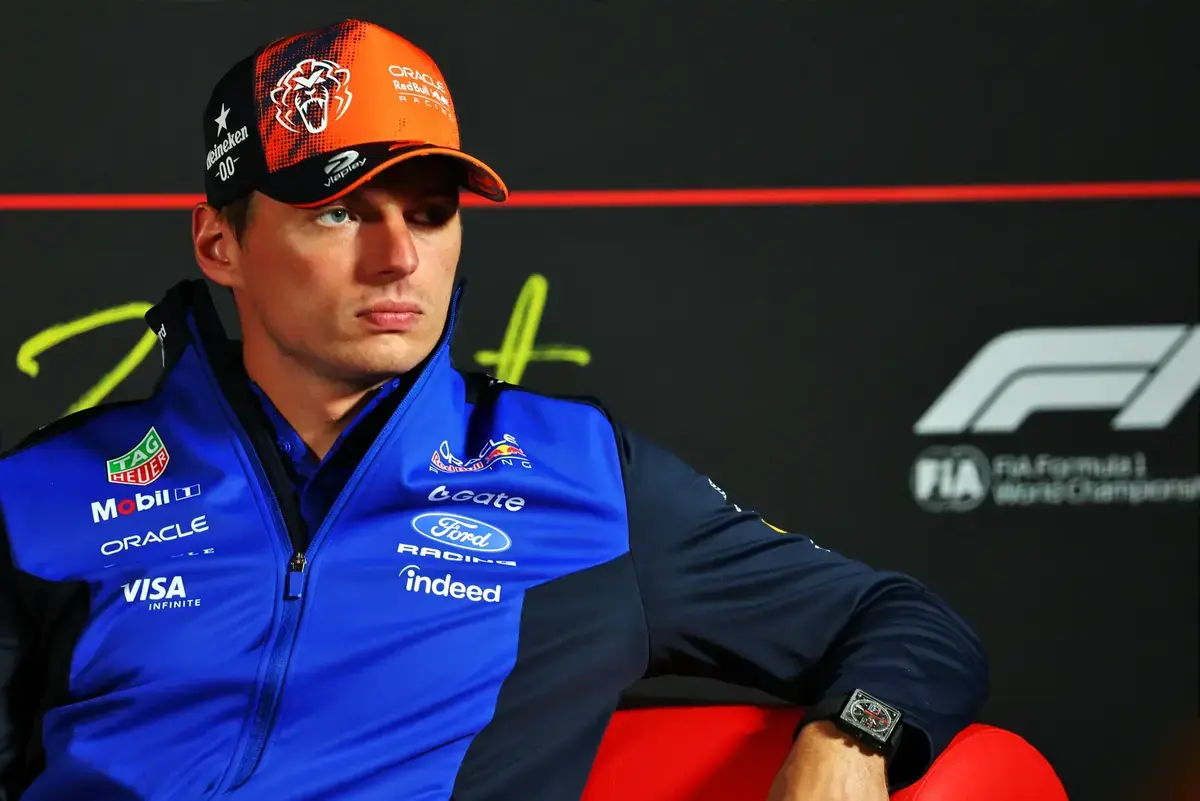
Verstappen made the admission in Zandvoort this week, speaking to media including Motorsport.com, as he arrived for a Dutch Grand Prix that suddenly felt rather more celebratory than it might have done just a few months ago. Red Bull and Verstappen had confirmed a contract extension to the end of 2030, ending what felt like an eternity of speculation.
“I was closer to retiring than changing teams.” – Max Verstappen
That single line rewrites the narrative of this entire summer. The McLaren rumours, understood to have been driven largely by Verstappen’s management through the Dutch press as leverage in negotiations with Red Bull, were a sideshow. The main act was a man seriously questioning whether Formula 1, in its current form, was still worth his time and energy.
The 2026 Regulations: The Real Culprit
To understand why Verstappen was having an existential crisis about his career, you need to understand how much he despises what the sport has become this season. The 2026 technical regulations introduced a near 50:50 split between internal combustion engine output and electrical power, and the result has been, to put it diplomatically, divisive. Verstappen has been one of its loudest critics, and he is not wrong to be.
The complaint is straightforward: when battery levels become the primary performance differentiator, you are no longer really watching a motor race. You are watching an energy management exercise with very expensive machinery attached. For a driver of Verstappen’s calibre, who built his reputation on extracting the absolute maximum from a car through raw talent and aggression, that is a bitter pill.
“After the first few races, I said to Laurent, don’t come to me with any kind of questions about the future, because I don’t even know if I want to stay.” – Max Verstappen
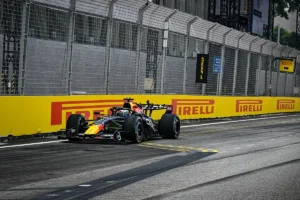
Laurent Mekies, the Red Bull team principal, presumably had an interesting few months. His best driver was signalling that contract talks were the least of his concerns. The team’s competitive slump, which has seen Red Bull slide to fourth in the constructors’ standings, was almost a secondary issue in Verstappen’s thinking. It was the product itself he objected to, not just his team’s performance within it.
Why He Stayed: Optimism About What Comes Next
So what changed? Verstappen points to a series of candid conversations with both F1 and the FIA about the direction of the regulations. He is clearly satisfied, or at least reassured, by what he heard. The broad trajectory in the sport is towards restoring the balance of power in favour of the combustion engine over the coming seasons, and there is growing momentum behind FIA president Mohammed Ben Sulayem’s push for naturally aspirated V8 engines from 2030 or 2031.
“We are slowly working towards something that becomes better and better. From my side, I adapted, I accept the situation that I think we’re all in, and just trying to make the best of that.” – Max Verstappen
The timing of his new deal is not a coincidence. Verstappen’s contract now runs to the end of 2030, which aligns almost precisely with the end of the current regulatory cycle and the expiry of the Concorde Agreement. If the V8 era arrives and the racing becomes more about mechanical grip and driver input than kilowatt-hour management, Verstappen has every intention of being part of it. If it does not, the door is left open.
It is a pragmatic piece of long-term thinking dressed up in loyalty clothing. Verstappen speaks warmly about wanting to finish his career at Red Bull, a team he has been with since 2016, and that sentiment appears genuine. But he is also a hard-nosed operator, and the contract reportedly includes a pay rise and greater freedom to pursue activities outside of Formula 1. He has not just signed on for the love of the brand; he has negotiated himself a comfortable arrangement on multiple fronts.
The McLaren Rumours: A Negotiating Tool
It is worth revisiting the McLaren story briefly, because it coloured so much of the summer. The speculation was persistent, detailed at times, and clearly had sources willing to brief the Dutch press enthusiastically. The understanding now is that this was driven by Verstappen’s management as a lever to extract better terms from Red Bull. Whether that is entirely fair is a separate debate, but it worked. And Red Bull, with Verstappen committed until 2030, have bought themselves a long-term asset who still carries enormous commercial value, even in a season where the car has struggled to stay with the frontrunners.
Verstappen’s podium in Hungary was, by his own standards, an overachievement given where Red Bull sits in the pecking order. The gap to Mercedes and Ferrari is significant, and McLaren are now in the mix too. Kimi Antonelli leads the drivers’ championship by 50 points, and Red Bull’s 177 constructor points leave them well adrift of the top three teams. There will be no championship challenge from Verstappen this year. Both sides know that.
A Career That Almost Ended on His Own Terms
There is something revealing about the way Verstappen frames all of this. He did not threaten to go to a competitor as his nuclear option. His nuclear option was simply to stop. That tells you a great deal about where his head is. He races because he loves racing, and when the racing stopped feeling like racing to him, the most logical conclusion was not to find better racing elsewhere, it was to question whether the whole enterprise was worth continuing.
He has, for now, been talked around. The conversations with F1 and the FIA have given him enough to hold onto. The 2030 endpoint is a built-in review clause as much as it is a commitment. And if the V8s arrive and the product improves, you might find Verstappen still at it deep into his thirties.
For Red Bull, the deal is a relief wrapped in uncertainty. They have their man, but they need to give him a car worth driving again. That is the unspoken condition running through every word Verstappen said in Zandvoort. He has been patient. He will not be patient forever.