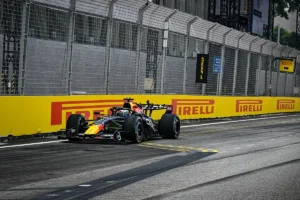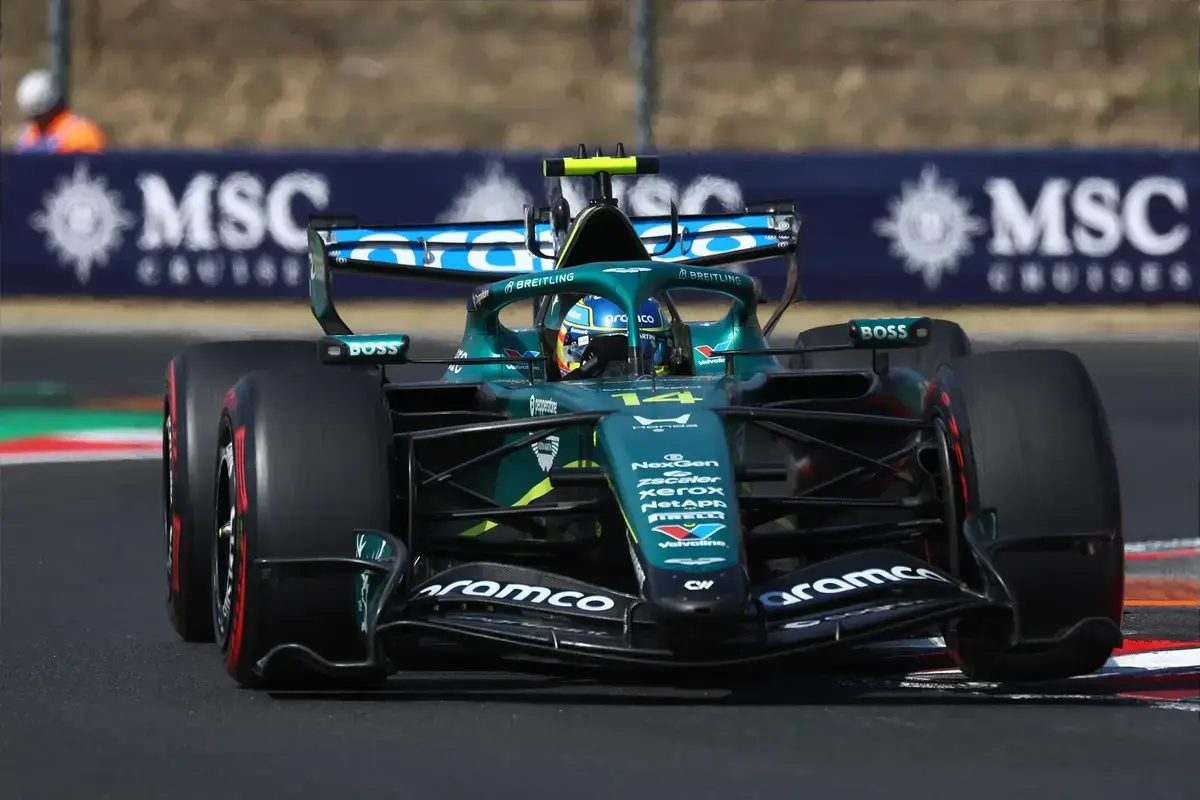

While Fernando Alonso and Lance Stroll were reportedly fearing permanent nerve damage to their hands, Aston Martin said nothing. Not a word of complaint to Honda. In a season that has been an almost unrelenting disaster for the Silverstone outfit, that restraint is either admirable professionalism or the most dignified suffering in recent F1 memory.
The Vibrations Were That Bad
To understand the scale of what Aston Martin endured, you need to revisit the nightmare that was winter testing. Honda’s power unit arrived with severe battery vibration problems so extreme that mirrors shook loose and components rattled apart mid-lap. Adrian Newey went public in Melbourne with the uncomfortable truth: both drivers were genuinely concerned about lasting nerve damage. Numbness in hands and feet. At a Grand Prix circuit. In 2026.
Honda’s trackside manager Shintaro Orihara is candid about just how close to the edge it got.
“Without countermeasures, we would not have survived rounds one, two and three. Between winter testing and the first race, we had daily meetings between HRC Sakura and Aston Martin about what we needed to do. Together we developed a solution.” – Shintaro Orihara
That emergency fix prevented further battery failures, but the vibrations themselves lingered. With just a single championship point and ten retirements in the first eleven races, the partnership looked cooked. Other F1 partnerships have cracked under far less pressure, yet Aston Martin kept their frustration strictly internal.
The Honda Philosophy That Backfired
Part of the problem, Orihara admits, was structural. Honda rotates staff constantly between its road car and F1 divisions, a philosophy designed to spread knowledge across the company. Noble in theory. Costly in practice. By late 2025, Honda concluded that the staff levels were simply not sufficient for the demands of modern Formula 1, and quietly recalled several engineers with experience from the Red Bull era to plug the gaps.
The fact that Aston Martin only realised in November 2025 that Honda’s project composition had fundamentally changed since the Red Bull glory years raises uncomfortable questions about due diligence on both sides. A partnership agreed in 2023, and yet the penny only dropped two months before the car had to race.
Zandvoort and the ADUO Gamble
Honda arrives at the final Dutch GP at Zandvoort carrying its first ADUO upgrade of the season. Rather than splitting its two allocated development opportunities, Honda banked them into one substantial summer push, timed deliberately to align with the sixteen-part chassis upgrade Aston Martin debuted in Hungary. Smart thinking, even if the gap to the benchmark remains north of four per cent.
“A big challenge gives us big motivation. At Honda, our spirit is always ‘never give up’. The more challenging it is, the greater our motivation.” – Shintaro Orihara
That is a very Honda thing to say. Whether it translates into points for a team currently propping up the constructors’ standings on a single point is another matter entirely. The dignity Aston Martin showed during the worst of it has clearly earned genuine respect from their engine partner. Whether respect pays dividends at Zandvoort, we are about to find out.