
Fifty years ago today, Niki Lauda climbed into his Ferrari at the Nürburgring and nearly never climbed out again. The 1976 German Grand Prix produced one of the most harrowing accidents in Formula 1 history, and the story behind it is even more uncomfortable than the footage.
He Tried to Stop It Happening
The detail that never gets enough airtime: Lauda had already voted against racing at the Nordschleife. Earlier in 1976, he convened a drivers’ meeting and pushed for a boycott of the circuit, arguing the cars had simply outgrown the 22.8-kilometre monster. He was outvoted three to two. So he turned up, strapped in, and drove.
On race morning he tried again, calling another meeting to discuss a last-minute boycott after rain made conditions even more treacherous. The majority voted to race. Within hours, Lauda’s Ferrari was a fireball.
The Crash at Bergwerk
Just two laps in, after a pit stop for slick tyres, Lauda reached the fast left-hander at Bergwerk. According to his own account, a failure in the rear suspension, specifically a newly-designed magnesium bracket on the right rear wishbone, caused the wheel to collapse. The Ferrari speared into the rock face, bounced back across the track, and erupted in flames. Incoming cars had no chance to avoid it.
Arturo Merzario, Brett Lunger, Harald Ertl, Guy Edwards, and Hans-Joachim Stuck all stopped. Merzario, crucially, managed to release Lauda’s harness on his third attempt, the seatbelts jammed tight by the deformed chassis. Lauda had gone limp by then, which ironically made it possible.
“He came to Fiorano. He was still bleeding. He got in the car.” – Daniele Audetto, former Ferrari team manager
Adding to the severity: Lauda’s new AGV helmet was a looser fit than his usual Bell. At impact, it came off. The burns to his face, scalp, and lungs were catastrophic. He received last rites at the hospital in Mannheim.
Back in 42 Days
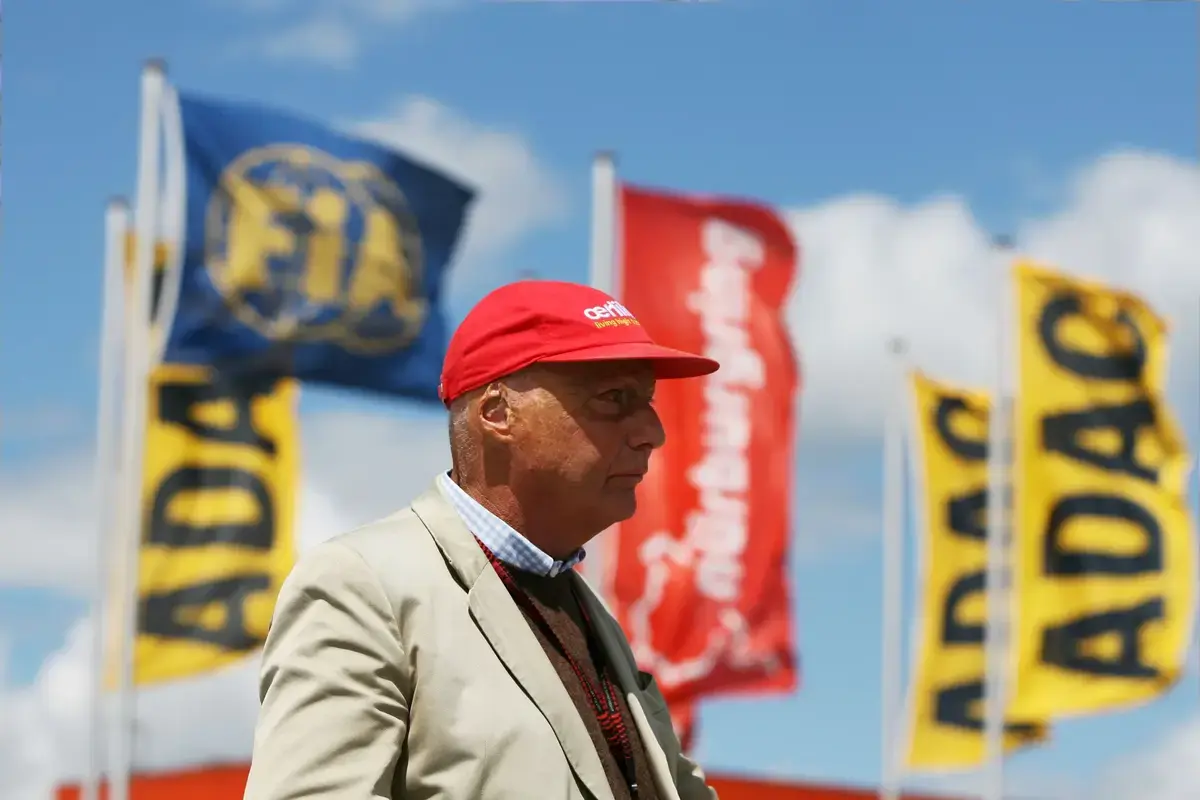
Forty-two days later, Lauda finished fourth at Monza. Fourth. While bleeding through his bandages during a secret test at Fiorano days earlier. The iconic red cap, now his trademark, was initially just a practical measure to stop the dressings slipping when he removed his helmet.
He later admitted he was rigid with fear at Monza, and admitted the same at Fuji, where he climbed out voluntarily in the wet season finale, handing James Hunt the title by a single point. That decision is still debated. He answered his critics a year later, winning the 1977 championship.
What It Changed
The Nordschleife never hosted another Formula 1 race. Safety became the sport’s defining political battleground of the following decade. Whether F1 would have got there without 1 August 1976 is a question worth sitting with. You might also want to read about how today’s drivers approach risk very differently, and how much has changed in the sport’s attitude to driver welfare since Lauda’s era.
Lauda died on 20 May 2019, aged 70, still carrying the scars. He asked to be buried in his Ferrari race suit. The one from the years he won. Not the year that almost killed him, and not the year he gave away the title. The suit from when everything went right. Make of that what you will.