
When your driver gets a penalty and costs a race leader the victory, you have two options: hold your hands up, or find someone else to point at. Williams team principal James Vowles has chosen a combination of both, and Fernando Alonso is now firmly in the frame.
What Actually Happened
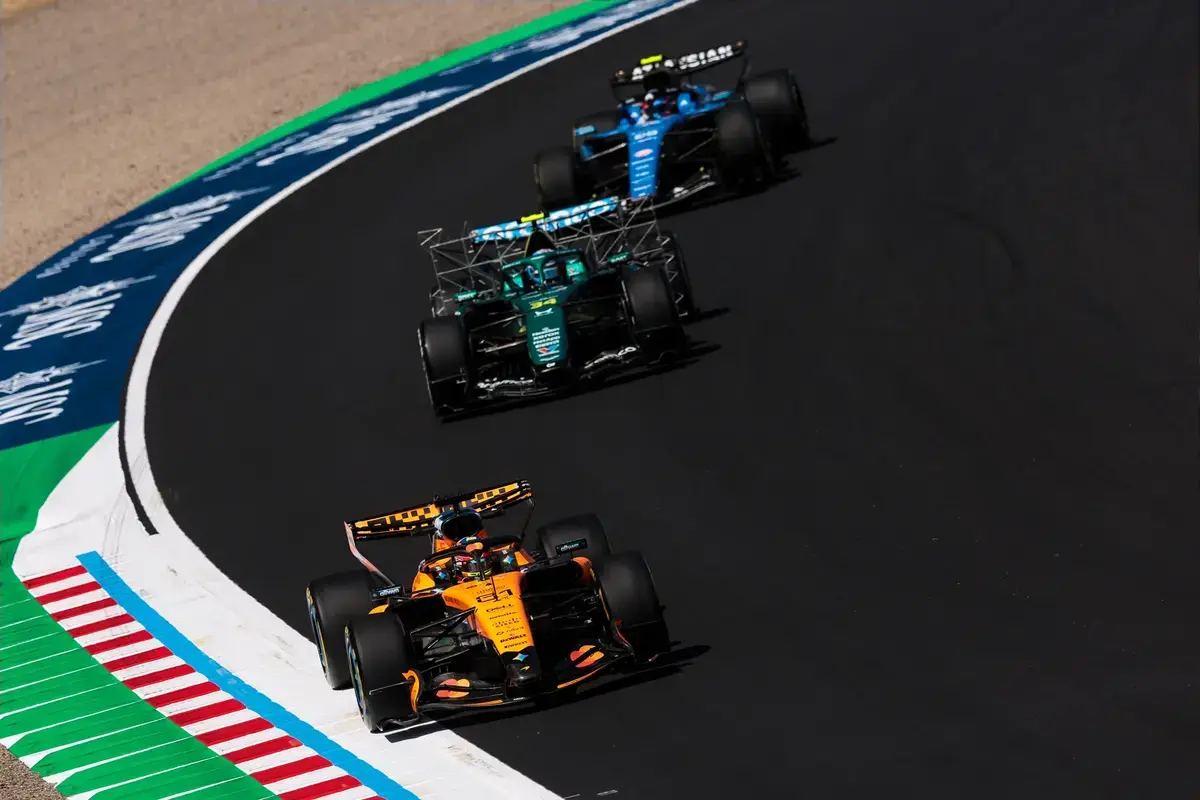
On lap 38 of the Hungarian Grand Prix, Oscar Piastri was attempting to lap the two Williams and Aston Martin cars running well outside the points. Carlos Sainz drifted across him at the exit of Turn 2, the pair made contact, and Piastri lost the lead. A five-second penalty followed for Sainz, who claimed it was impossible to avoid. Lando Norris inherited the win. That part of the story is already well documented in our Hungarian GP race report.
The FIA System That Fell Apart
The complicating factor was a failure of the FIA’s automatic blue flag signalling system. Rather than drivers receiving precise GPS-triggered warnings about approaching leaders, the Hungaroring reverted to marshals waving flags by hand. The flashing blue lights then came on, but without identifying which driver they were intended for. In 2026, in a sport that sells itself on cutting-edge technology, that is quite the oversight.
“At one point we were just operating with marshals doing their best, but waving blue flags, and it’s a very difficult thing for marshals to do.” – James Vowles
Enter Alonso
Here is where Vowles shifts some of the weight. Fernando Alonso, running behind Sainz, was first in line to let Piastri through. He ignored the blue lights and stayed put. Then, rather than yielding, he dived up the inside of Sainz at Turn 1. That put Sainz temporarily behind Alonso, then Alonso went inside again at Turn 2, which shuffled Sainz back ahead just as Piastri arrived. Cue chaos.
“Fernando should have conceded that position earlier. What complicated it is fundamentally, without the automatic system, cars were staying in place for perhaps longer than they should have done.” – James Vowles
Williams Admits Its Own Culpability
To his credit, Vowles does not stop at blaming Alonso. He acknowledges Williams should have radioed Sainz at the precise moment he was alongside Alonso on the run to Turn 2, flagging that Piastri was closing. They told him at Turn 1. That was a lap too late and a corner too early. The stewards, for their part, did not investigate Alonso at all, and treated Sainz’s limited visibility as a mitigating factor without reducing his penalty. Convenient all round.
The broader question this raises about how the blue flag system failure was handled has not been properly answered. A technology-dependent sport with no robust manual fallback is a sport asking for exactly this kind of mess. Vowles wants a better mechanism. He is not wrong. He just needed one last Sunday.