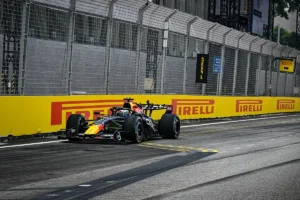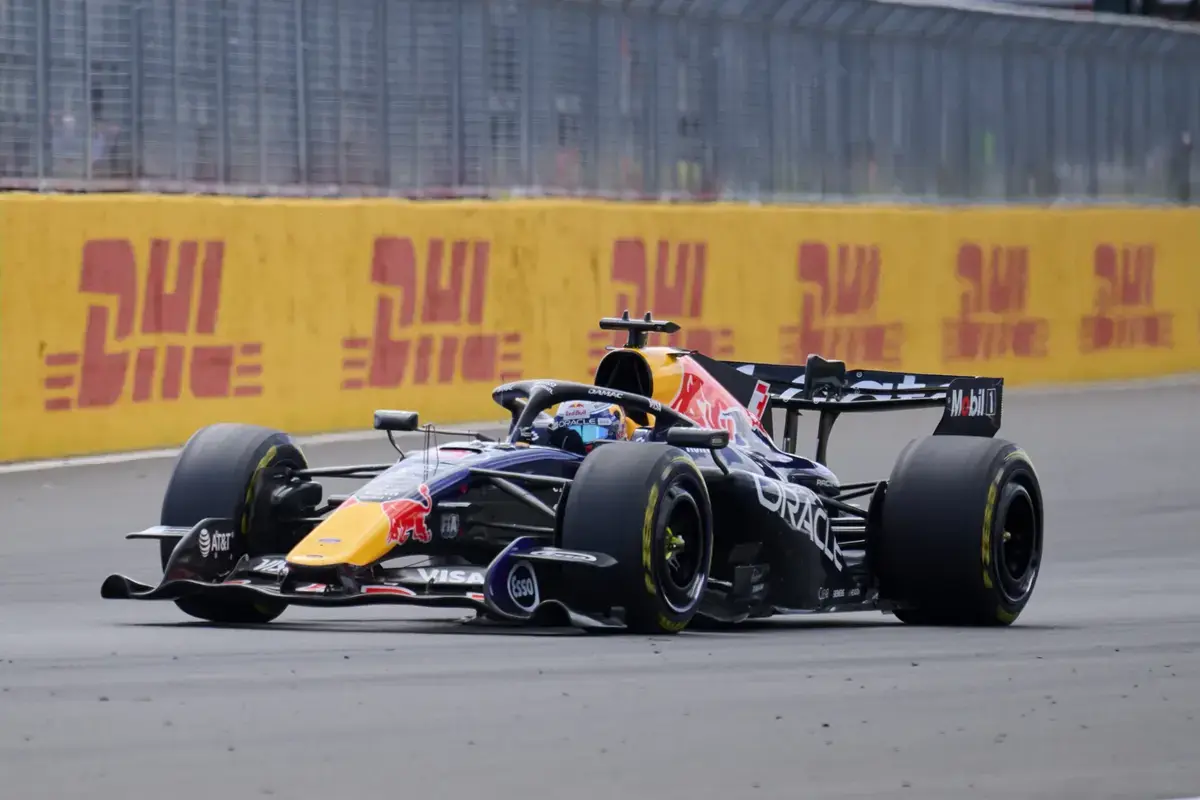

Red Bull has pulled the plug on its ‘Macarena’ rotating rear wing at the Belgian Grand Prix, confirming what the paddock had already suspected: the revolutionary design that was supposed to give Max Verstappen an edge has, twice in a row, nearly ended his weekend at high speed.
Two Crashes, One Very Expensive Lesson
Verstappen lost control in qualifying at the Austrian Grand Prix, then spun into the gravel at Stowe while running third at Silverstone. Same culprit both times: the Macarena wing failing to reattach airflow quickly enough when switching from straight-line mode back to cornering mode. The result is a sudden, brutal loss of rear downforce at exactly the wrong moment.
He was diplomatic about it. Sort of.
“Like Austria, a different fault but the same outcome. At that point, it’s super dangerous because you can really hurt yourself, two times. I was lucky in Austria, I was lucky here, but that’s why you get really fed up with it.” – Max Verstappen
Getting fed up is one thing. Getting fired into a barrier at a high-speed corner is quite another. Red Bull team principal Laurent Mekies confirmed to the media that a post-Silverstone filming day at the circuit uncovered a specific problem with the wing’s design. He was not exactly forthcoming with the precise details, but the decision to drop it speaks loudly enough.
What the Macarena Wing Actually Did
Introduced at the Miami Grand Prix, the design rotates the top flap more than 180 degrees in straight-line mode, creating a larger opening than conventional active aero systems and delivering greater drag reduction. On paper, it is genuinely clever. On track, it has proven to be genuinely dangerous when the flap fails to reattach cleanly on corner entry.
Ferrari pioneered the concept in pre-season testing and has used it without major incident since Miami. That detail will not have gone unnoticed in Milton Keynes. There are even reports that Red Bull has approached the FIA to seek a ban on the design, which would be a remarkably transparent piece of political manoeuvring given they built their own version and raced it. Ferrari, unsurprisingly, appears entirely unbothered.
Spa Adds Another Layer of Pain
Dropping the wing at Spa is a particularly costly call. With five straight-mode zones at Spa-Francorchamps this weekend, including the approach to Eau Rouge and the full length of Kemmel, drag reduction is not a luxury here. It is a competitive necessity. Both Verstappen and Isack Hadjar will run the older specification wing, meaning Red Bull is almost certainly handing straight-line performance back to its rivals.
The FIA has also asked questions of both Red Bull and Ferrari about the safety of the design. No ban has been issued, but the scrutiny is real and growing.
Trust, Once Lost, Is Hard to Buy Back
Verstappen visited the Red Bull factory in Milton Keynes last week for simulator work to analyse the crashes. That is the kind of meeting that sounds routine but almost certainly was not. Red Bull is a team under significant internal pressure, and a four-time world champion who publicly calls his own car “super dangerous” is not a situation any team principal can afford to ignore.
The Macarena wing may return in modified form later this season. Or it may not. Either way, Red Bull spent months developing an innovation that has so far produced two crashes, one very unhappy driver, and a hasty retreat at one of the season’s most demanding circuits. Innovation is admirable. Reliability is what wins championships.