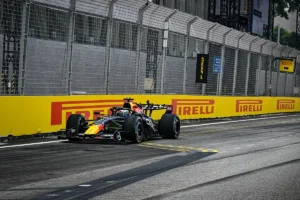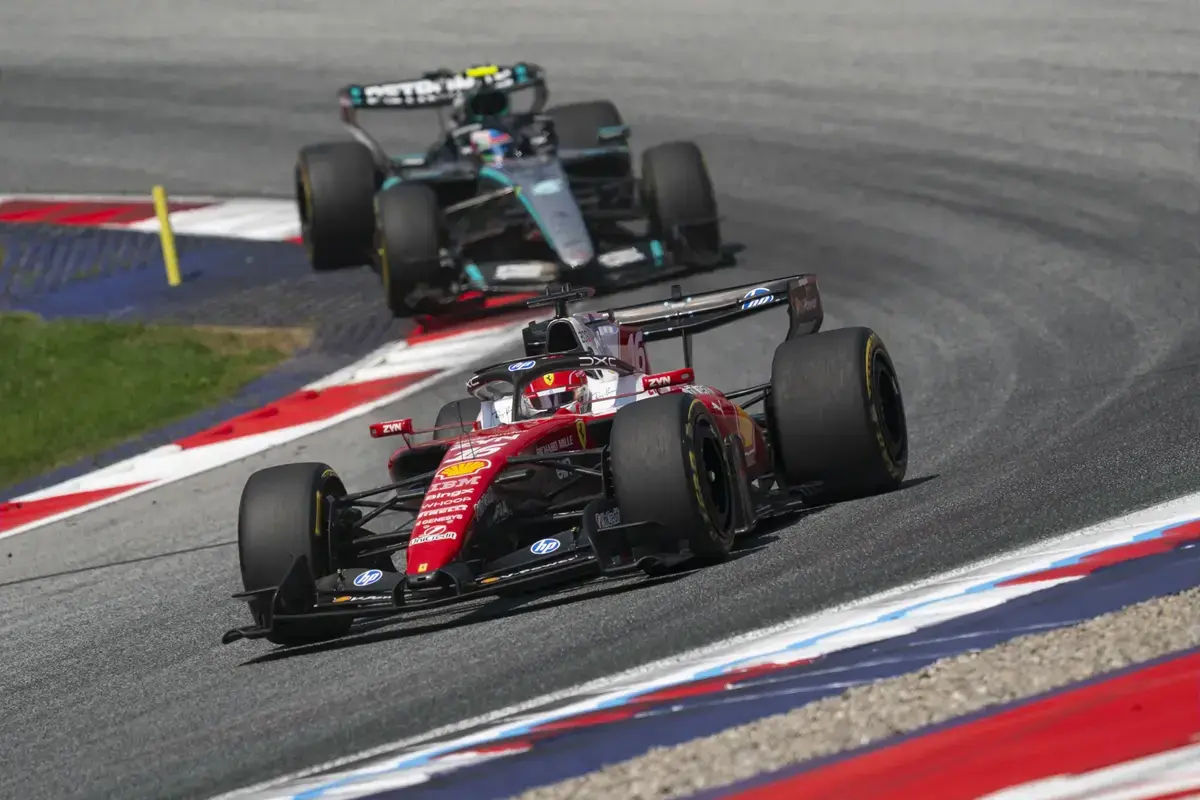

Second and third on the grid. Fifth and eighth at the flag. Ferrari arrived in Austria riding the crest of a Barcelona wave. They left the Red Bull Ring quietly wondering how a competitive SF-26 can become an undriveable wreck inside 71 laps.
The Rear End That Ate the Race
The story of Lewis Hamilton and Charles Leclerc‘s Austrian Sunday can be told in two words: rear tyres. Both drivers suffered severe rear degradation from early in the race, destroying their pace, forcing strategy pivots, and ultimately leaving Ferrari as the fourth-fastest team in the race order. Hamilton was blunt about it.
“I don’t know why we were so slow today. We really struggled on pace, degradation was really, really high, much worse than anticipated.” – Lewis Hamilton
Hamilton had actually predicted a difficult tyre day before lights out. He wanted to start on soft tyres and was convinced a three-stop was inevitable given the 60-degree track temperatures. The team pushed him onto mediums. He was right; they were wrong. He switched to three stops anyway, wound up in traffic, and finished behind McLaren’s Oscar Piastri. Not quite the Barcelona sequel anyone at Maranello had in mind.
Leclerc: A Different Car on Sunday
Leclerc’s afternoon was considerably grimmer. Starting second, he slid to a lapped eighth, finishing dead last among the top team drivers. The man who felt genuinely confident after qualifying was completely lost by lap five.
“Yes. Qualifying was a step forward yesterday. I felt a little bit better in the car but today it’s kind of back to struggling.” – Charles Leclerc
He later revealed that Ferrari had copied a 2025-spec setup direction that worked nicely over one lap but destroyed rear grip over race distance. On a car as sensitive as the SF-26, that single miscalculation was enough to ruin an entire Sunday. Leclerc had been surprised by his strong qualifying performance; he was equally surprised by how quickly it evaporated.
Vasseur’s Honest Admission
To his credit, Fred Vasseur did not dress this up. He admitted Ferrari spent too much of the race reacting to Mercedes rather than managing their own pace window.
“We were probably too focused on Mercedes today. We pushed too hard in the opening laps and then reacted too aggressively with the strategy.” – Fred Vasseur
The opening laps saw both Ferraris overcooking their rear tyres trying to keep pace with George Russell. By the time Ferrari realised the battle was lost, so were the tyres. Every strategy adjustment afterwards was damage limitation, and none of it worked. Russell had already pulled clear long before Ferrari’s strategists accepted reality.
What It Means for the Title
Hamilton drops to third in the drivers’ standings, now 46 points behind Kimi Antonelli. Leclerc is a further 46 behind his own team-mate. Ferrari remain second in the constructors’ table, but Mercedes hold a 98-point lead. Hamilton has already warned that closing the power unit gap will take months, not weeks, and Silverstone’s long straights will not be kind to a car still carrying a smaller turbo than its rivals.
Barcelona was real. Austria was equally real. The uncomfortable truth is that Ferrari’s actual level probably sits somewhere in between, and that middle ground is not where championships are won.