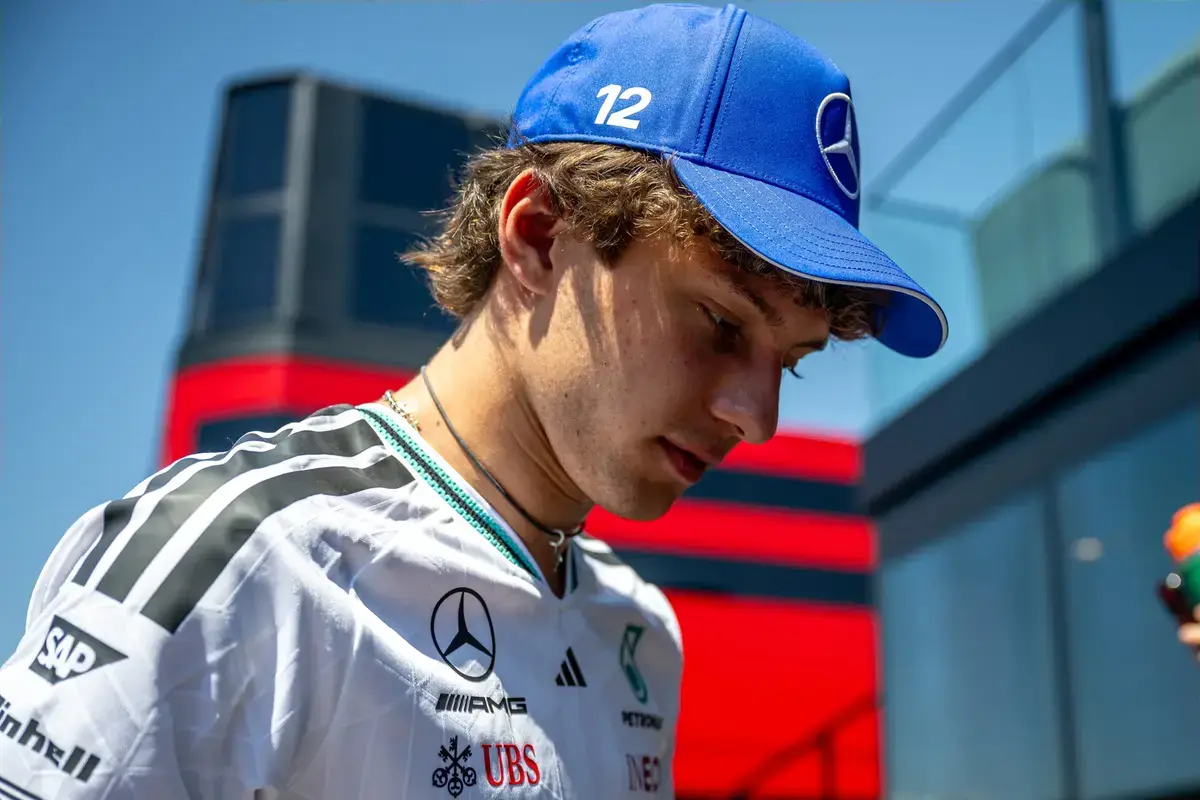

Kimi Antonelli starts Sunday’s Austrian Grand Prix from fourth on the grid. He probably should have started second. The championship leader misread a single yellow flag as a double after Max Verstappen‘s heavy crash in Q3, aborted his lap, and watched George Russell and both Ferraris shuffle him back. Now he wants the rules changed. He is not wrong.
What Actually Happened
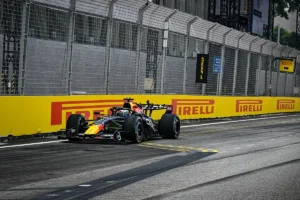
Verstappen binned his Red Bull at Turn 9, a fast, blind corner at the Red Bull Ring, and the marshals immediately waved single yellows. Correct procedure. The upgrade to double yellows, however, requires a command from race control, and that instruction arrived only after both Mercedes had already passed the incident. Russell lifted, salvaged enough in the first two sectors to score pole, and the stewards accepted his data. Antonelli, blinded by low sun and convinced he saw two flags rather than one, abandoned his lap entirely. The penalty for being cautious: fourth on the grid.
The Safety Argument Is Solid
Antonelli was not simply complaining about a lost grid position. His point cuts deeper than that.
“There was a car in the wall on a fast corner. I don’t know why it didn’t go double yellow straight away, because it’s a super quick corner, and if you go off at the same time, it can end up very badly.” – Kimi Antonelli
That is not a driver moaning. That is the championship leader identifying a genuine gap in the system. A stricken car sitting in the gravel at a high-speed blind corner, and the default response is a single yellow? Russell’s pole survived stewards scrutiny, but the broader question about flag escalation remains unanswered.
Could He Have Taken the Front Row?
Almost certainly. The data from his aborted lap shows Antonelli was just a tenth behind Russell across the first two sectors. Had he simply lifted as Russell did, the stewards would have been satisfied, and he would likely have pipped Leclerc to second by a similar margin. Pole was never on; Russell’s opening sectors were simply better on the day. But P2 was there for the taking, and the confusion cost him dearly.
A System That Punishes Caution
The uncomfortable truth is that the current framework created a situation where a driver who erred on the side of safety was penalised, while a driver who judged the lift precisely was rewarded. That is not necessarily wrong in isolation, but when the incident involves a crumpled car at one of the quickest points on the circuit, F1 should be asking whether the process for escalating to double yellows is fast enough. Verstappen’s crash was serious, and fifteen seconds is a long time before full caution is called at 280km/h.
Antonelli will move on. He is young, he is leading the championship, and Austria will be forgotten quickly enough. But his call for a review deserves a serious answer rather than a polite nod and a filing cabinet.