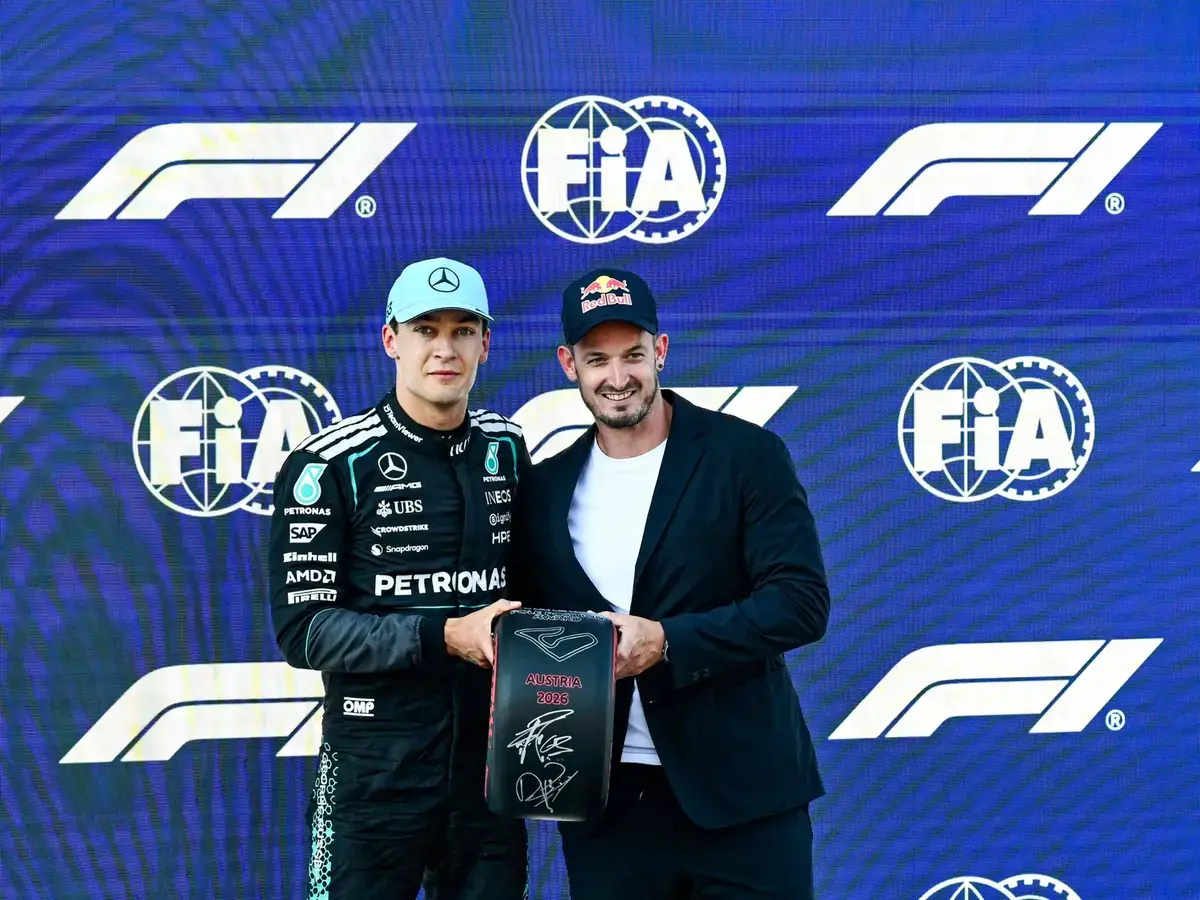

Eight hundredths of a second. That is precisely how much time George Russell lost through the yellow flag sector at Turn 9 in Austrian GP qualifying. His winning margin over Charles Leclerc was 0.236 seconds. So no, his pole was never remotely under threat, and the FIA were never going to take it away. The more uncomfortable question is whether any of this should have been allowed to happen in the first place.
What Actually Happened
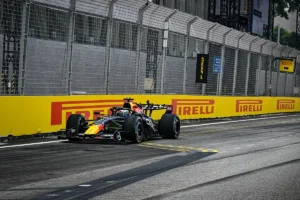
With Max Verstappen‘s Red Bull buried in the barriers, race control took 22 seconds to escalate from a single to a double yellow flag. That 22-second window was enough for both Mercedes drivers to navigate Turn 9. Russell spotted it was a single yellow, braked roughly 100 metres earlier than usual, and was back on full throttle the moment he cleared the corner. Kimi Antonelli, blinded by low sun and confused by his engineer calling “yellow, yellow” on the radio, mistakenly read it as a double and aborted his lap entirely. The rules say a single yellow requires you to reduce speed. They do not specify by how much. That ambiguity did all the work here.
Vasseur’s Warning Is Worth Listening To
Ferrari boss Fred Vasseur was careful not to question Russell’s lap directly. Smart move. But his broader concern hits home:
“I think the negative side of this is that next quali, if you have a crash, everybody will push.” – Fred Vasseur
He is not wrong. If drivers now know that lifting marginally through a single yellow is enough to keep a pole-position lap, the incentive to back off meaningfully has effectively evaporated. Vasseur also questioned why a medical car deployment did not automatically trigger a double yellow, which is a fair point that race control conspicuously has not answered. For more on Ferrari’s qualifying performance, Leclerc admitted he was genuinely surprised to end up on the front row.
McLaren Disagrees, Naturally
Andrea Stella, whose driver was not involved and therefore had nothing to lose, said the rules are working exactly as intended. He praised Russell for executing the yellow flag procedure cleanly. That is one way of looking at it. Another is that a driver lost only 0.08 seconds in a danger zone and called it a “huge lift.” Lewis Hamilton’s one-word verdict after learning Russell was quicker in that final sector was simply, “Yeesh.” That one syllable said rather more than a full press conference statement would have.
Antonelli Pays for Caution
The cruelest irony is that Antonelli’s instinct to abort was arguably the correct human response to a car embedded in the wall at a very fast corner. It cost him two grid positions and dropped him behind both Ferraris. Meanwhile, Verstappen’s crash was confirmed as an active aero failure, meaning he had no chance of saving it.
Pole for Russell, a headache for the FIA, and a very clear instruction to every driver on the grid for the next wet, messy, chaotic qualifying session: keep pushing until you are absolutely certain it is double yellow. Vasseur called it a negative message. He is being polite.