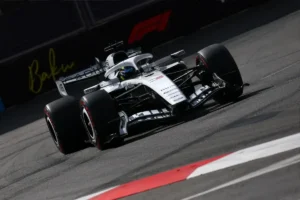
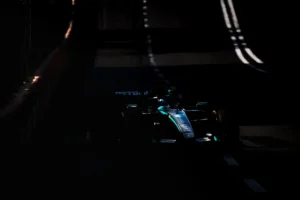
Carlos Sainz finally had a qualifying result worth talking about. Then he opened his mouth in front of the stewards and talked himself into a five-place grid penalty instead.
The Williams driver had hauled his heavily upgraded car into Q3 at the Baku City Circuit and set himself up for ninth on the grid, comfortably his best qualifying performance of a season he would rather forget. Within hours, the stewards had stripped it away, finding him guilty of failing to slow sufficiently for yellow flags during his final runs. The penalty drops him from P9 to P14, and suddenly a breakthrough Saturday looks a lot like every other Saturday: promising on paper, punished in practice.
What actually happened on track
Single yellow flags were shown in Marshalling Sectors 4 and 5, specifically after Turn 2 and on the approach to Turn 3. According to the stewards’ decision document, the indications were clearly visible, and Williams had already radioed Sainz directly: “Yellow ahead, lift.” Sainz did not dispute any of this. He confirmed at the hearing that he knew exactly what situation he was driving into.
Where it got interesting was his explanation for what he did about it. Sainz argued that he had planned a “global lift”, a single, deliberate reduction in speed spread across both consecutive yellow sectors rather than a distinct reaction in each one. He told the stewards he saw no need to slow on the straight itself and instead intended to show his response heading into and out of Turn 3. He also pointed out that the car which had originally triggered the yellow was no longer sitting in the run-off area, and said he expected the flags to be withdrawn regardless.
The stewards were not interested in the theory
It is a coherent argument. It is also, according to the stewards, not how the rules work. Their written ruling was blunt: where consecutive marshalling sectors carry yellow flag conditions, a driver has to show a significant reaction in each individual sector. Slowing down later does not retroactively cover the sector where you did not.
The telemetry did the actual damage to Sainz’s case. It showed his reaction to the yellow only materialised in Marshalling Sector 5. In Sector 4, the one after Turn 2, there was no meaningful reduction in speed that could be credited to the yellow flag at all. In fact, Sainz set his fastest time of the entire session in that exact sector, as reported by RacingNews365. Explaining that you planned a considered, holistic slowdown is a much harder sell when the data shows you were still pushing for your best lap time through the danger zone.
The stewards drew a line between this and cases where a driver’s overall sector time barely drops but the telemetry still shows a genuine, if modest, response to the flag. Sainz’s case did not fit that pattern. He knew about the yellow, he had been warned by his own team in explicit terms, the flags were visible, and the numbers showed nothing in Sector 4 that looked like compliance. Their conclusion: Sainz failed to sufficiently reduce speed under the single yellow flag in Marshalling Sector 4, full stop.
Grid reshuffle: who moves up
The five-place drop sends Sainz from ninth to fourteenth on the grid, and shuffles a chunk of the midfield forward in the process. Franco Colapinto, Oliver Bearman, Liam Lawson, Williams team mate Alexander Albon and Esteban Ocon all gain a place as a result.
| Pos | Driver | Team | Change |
|---|---|---|---|
| 9 | Franco Colapinto | Alpine | Promoted from P10 |
| 10 | Oliver Bearman | Haas F1 Team | Promoted from P11 |
| 11 | Liam Lawson | Racing Bulls | Promoted from P12 |
| 12 | Alexander Albon | Williams | Promoted from P13 |
| 13 | Esteban Ocon | Haas F1 Team | Promoted from P14 |
| 14 | Carlos Sainz | Williams | Dropped from P9 |
A weekend already thin on good news for Sainz
None of this changes the fact that Sainz had actually looked competitive for once. Williams brought a heavy upgrade package to Baku and it clearly worked, at least until the stewards’ room got involved. Instead of starting inside the top ten for the first time in a while, Sainz will now line up from fourteenth, further back than his raw pace suggested he deserved.
It is also a reminder of how unforgiving Baku’s yellow flag rules are treated by race control. This is a circuit lined with walls rather than run-off, and stewards have shown all weekend they are in no mood to let marginal calls slide. Sainz’s argument that the danger had effectively passed by the time he reached it was not enough. The rulebook does not care what a driver personally judges to be safe; it cares whether the telemetry shows the required lift, sector by sector, and his did not in the one that mattered.
What it means for Saturday
Williams sits ninth in the constructors’ standings with 11 points, scrapping for territory rather than glory, and every position matters in that fight. A ninth-place grid slot with a genuinely upgraded car was the kind of Saturday that could have turned into a rare points haul. Fourteenth on the grid, in a midfield that is close enough to be chaotic on the opening laps at a street circuit like Baku, is a considerably harder place to engineer that outcome from.
The race starts at 11:00 UTC on Saturday, check the calendar for your local time. Sainz will start from further back than his Saturday effort warranted, and the stewards’ explanation, however methodical, will be cold comfort to a driver who thought he had finally turned a corner.