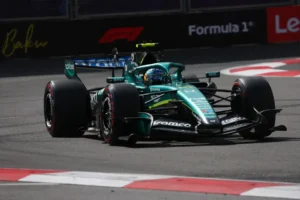
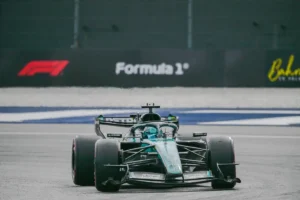
Lando Norris wants you to know that he’s driving better than ever this season. The standings, inconveniently, disagree. With his title defence hanging by a thread and McLaren still chasing a mysterious straight-line speed loss, the Briton has chosen this week to argue that his numbers simply don’t reflect his talent.
It’s a bold pitch from a driver sitting fifth in the championship, 132 points off the lead with 183 still up for grabs. The maths is not flattering. If Norris drops 19 points to Kimi Antonelli across the Sprint weekend in Singapore, his title defence is mathematically dead. That is not a hypothetical disaster lurking somewhere down the road. That is this weekend.
The ‘extra level’ claim
Speaking ahead of the Singapore Grand Prix, Norris argued that results don’t always tell the full story, insisting he has unlocked something extra in his own performance this year regardless of how McLaren’s car has behaved around him.
“There’s not a lot you can do about that honestly. It’s the same with everything in life, you’re kind of just judged off the visual performance, especially from TV, and especially in F1, more than just what your own performance has been, because your car might just not be as quick one weekend compared to another. I guess you just hope that people understand that.” – Lando Norris
Translated into plain racing terms: he thinks he’s been driving at a higher level than the results show, and he’s annoyed that nobody outside the garage can see it. Which is a fair thing to feel privately. Saying it out loud while sitting behind two Mercedes drivers and level on points with Max Verstappen is a different matter, reported by PlanetF1.
McLaren started 2026 well off the pace of Mercedes and Ferrari while locked in its own fight with Red Bull, before in-season development dragged the team back towards the front. Both Norris and Oscar Piastri have taken race wins this year, which makes the current slump look all the stranger.
Margins, not miracles
Norris leaned heavily on the idea of small margins deciding everything. His three pole positions were each secured by less than half a tenth, and he argues those tiny gaps, not some sudden leap in raw pace, explain his win tally.
“The three times I’ve been on pole have been by under half a tenth every time. We’re talking just very small margins. But those three pole positions gave me chances to win three races. If I was not on pole position, it’s unlikely I would have won any of the races.” – Lando Norris
He went further, insisting that his driving in the second half of last season was just as good as this year’s, but that the current McLaren simply demands a different approach behind the wheel.
“The second half of last year, I think some of my performances were just as good as this year. I think this year, you have to drive the car in a different way and I’ve had to adapt a lot to how you have to drive this year’s car.” – Lando Norris
The ‘two skill levels’ theory
Norris then offered his own breakdown of what separates drivers at the sharp end of the grid, describing it as a split between extracting pace from the car itself and extracting it from the power unit, tyres and driving style together.
“I think there are just two skill levels to it. There’s the general skill level of just extracting performance from the car itself, and then there’s extracting performance from the power unit, and the driving and the tyres and this extra little level. I think that’s what I’ve done a very good job on this year and being able to understand very quickly.” – Lando Norris
He insisted he isn’t bothered whether outsiders buy any of this, framing his job as simply extracting the maximum from himself each weekend regardless of what the car allows.
“I’m not fussed if people on the outside see it as good or not. I think it’s more important for me and my team that I’m satisfied. And my job at each weekend is to extract the maximum out of myself. If I can do that, I’m happy.” – Lando Norris
He went as far as redefining what a good result looks like for McLaren this weekend, suggesting P5 or P3 could count as a win given the car’s current limitations.
“A win for us this weekend could be a P5 or a P3. I think you have to acknowledge what the maximum performance for your own team is in your own car, and that’s all you can really be happy with at the end of the day.” – Lando Norris
The straight-line problem nobody wants to name
None of this talk of margins and skill levels changes the fact that McLaren has been dealing with a straight-line speed deficit that Norris himself has previously called painful, costing him roughly two-tenths of a second per lap in recent rounds. It cropped up badly in Azerbaijan, where he qualified fifth before being eliminated in a multi-car crash, and again in Malaysia, where he qualified fifth once more and finished ninth after a late mistake, a result that also landed him an FIA investigation over erratic driving.
Norris believes the team has made progress identifying the cause, pointing to both driver-side learnings and more technical factors behind the lack of top speed. Singapore’s layout, which places less emphasis on straight-line performance than recent circuits, gives McLaren a chance to find out whether the fix actually works rather than just sounds good in a press conference.
Why the numbers still win this argument
Here is the problem with Norris’ pitch: Formula 1 is not graded on effort, feel or self-satisfaction. It is graded on points, and his are drying up. Antonelli leads the championship on 320, with Russell second on 236 and Hamilton third on 214. Norris sits fifth on 188, level on points with Verstappen, who arrives in Singapore having just won in Bahrain and matched Schumacher’s win tally for a single team. A driver can talk all he likes about extracting 99.5% instead of 99%, but a title defence does not get marked on a curve.
Norris is of course entitled to his own internal scorecard. Drivers rationalise bad seasons all the time, and some of it is probably true: McLaren’s car has clearly not been the weapon it was earlier in the year, and small margins genuinely do separate poles from midfield starts. But there is a difference between explaining a gap and explaining it away.
The team still needs to prove the straight-line fix works before any of this talk about extra levels means anything on a stopwatch. Qualifying for the Singapore Grand Prix gets going at 13:00 UTC on Saturday, with the race itself at 12:00 UTC on Sunday, check the calendar for your local time.