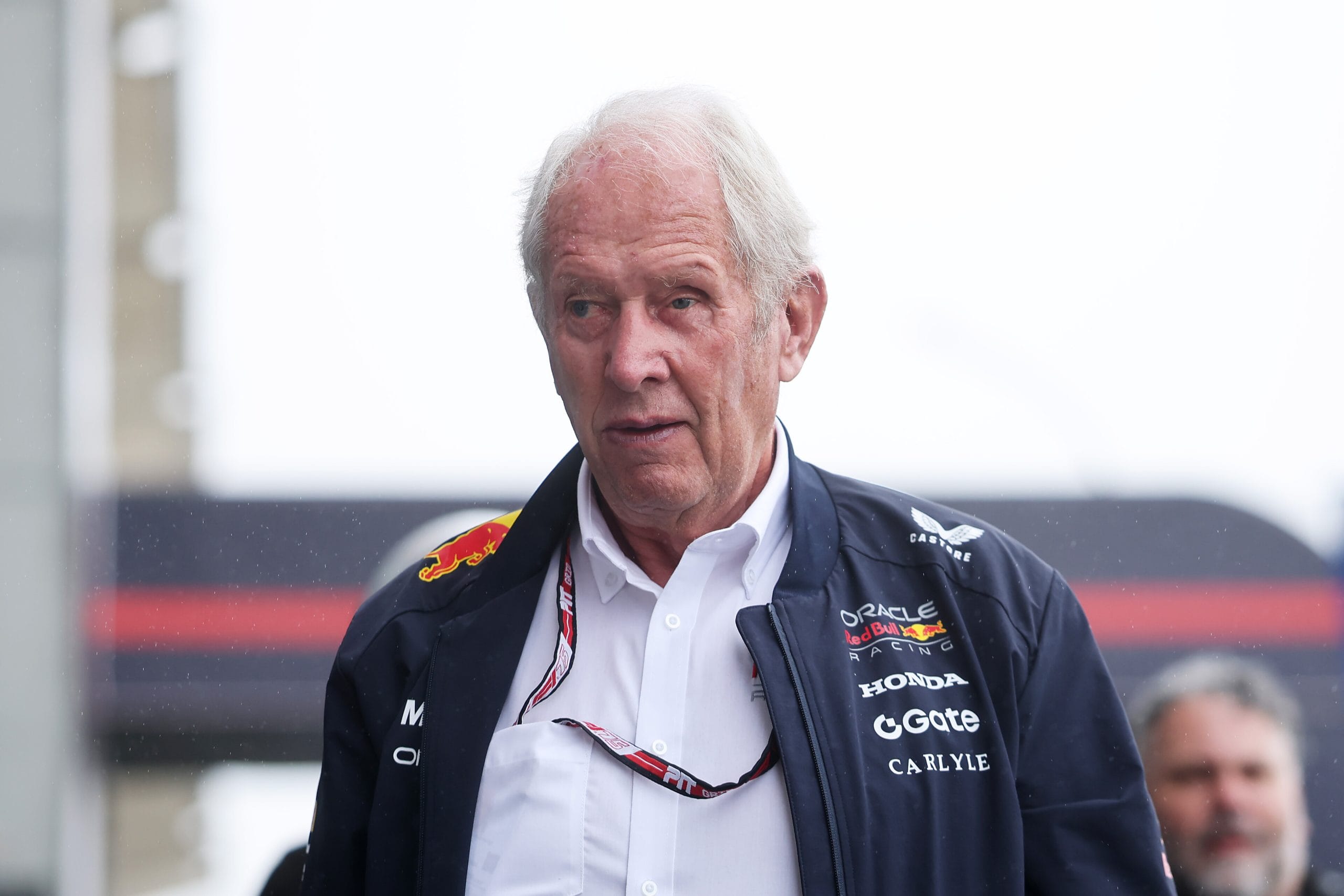
Helmut Marko’s finally done. The 82-year-old who discovered Max Verstappen, survived more internal power struggles than Ferrari’s had strategic disasters, and spent 25 years building Red Bull’s F1 empire is walking away. After nurturing four-time world champions and masterminding one of the sport’s greatest comeback attempts, the Austrian couldn’t even stick around until his 2026 contract expired.
Two points. That’s what separated Verstappen from his fifth consecutive title in Abu Dhabi. Two points that apparently convinced Marko it was time to throw in the towel, pack his bags, and leave the mess for someone else to sort out.
Red Bull confirmed Tuesday that their motorsport advisor would “step down at the end of 2025.” Lovely corporate language for what insiders suggest was anything but a peaceful retirement party. When your departing legend signs drivers against management’s explicit wishes and sparks social media death threats through careless commentary, “stepping down” becomes a rather generous description, doesn’t it?
The “Most Intimate” Relationship That Built an Empire
Marko opened up to Austrian broadcaster ORF about his bond with Verstappen, delivering the kind of emotional farewell that makes you wonder whether he’s leaving voluntarily or being shoved toward the exit.
“The connection was certainly a very intense one, or the most intimate, I can’t say. But it was the closest connection I’ve ever had with a driver.” – Helmut Marko
That’s properly heartfelt from someone who’s spent decades working with F1’s biggest talents. Marko watched Verstappen evolve from a 17-year-old kamikaze driver into someone capable of mounting a 104-point championship comeback. The Austrian famously promised the Dutchman an F1 seat in 2015 when he was just 16, beating Mercedes to his signature by offering immediate racing rather than patience.
Now that partnership’s ending because Red Bull’s management decided rogue driver signings and inflammatory media comments weren’t quite the professional image they’re cultivating for 2026.
When Two Points Become Your Breaking Point
Marko insists he would’ve left regardless of whether Verstappen won or lost the title. Which sounds suspiciously like someone trying to save face after their driver came agonisingly short despite the most spectacular comeback in recent F1 history.
“We had a difficult season this year. Although this comeback was unique, it was still a very bitter disappointment. Even after the race, I felt that something had been lost.” – Helmut Marko
Something was lost, alright. Verstappen’s fifth title. Red Bull’s dominance. Marko’s enthusiasm for continuing in a role where he’s increasingly marginalised by corporate restructuring and PR departments tired of cleaning up his messes.
The Austrian made his decision Monday in Dubai. No consultation with Verstappen beforehand. No lengthy deliberation with Red Bull’s leadership about partial solutions. Just a phone call to Oliver Mintzlaff asking for a quick meeting before the championship dinner nobody really wanted to attend anyway.
Verstappen couldn’t even make the dinner due to flight problems. So Marko rang him the next day to deliver the news that his closest ally was abandoning ship.
“It wasn’t a normal conversation. There was a certain melancholy in the air. He said he never could have imagined that he would ever achieve such success.” – Helmut Marko
That’s the sound of someone realising their greatest partnership is ending not with triumph but with two-point deficits and organisational reshuffles they can’t control.
The Alex Dunne Disaster That Broke Everything
Here’s what actually finished Marko at Red Bull. Not age. Not the title loss. Contractual chaos that management couldn’t tolerate any longer.
Marko signed Alex Dunne to Red Bull’s junior programme against explicit instructions from Mintzlaff, Laurent Mekies, and the shareholders. The Irishman had terminated his McLaren deal hoping for better F1 prospects. Marko saw opportunity and pounced without consulting anyone.
Red Bull discovered Dunne had been contracted without their knowledge or approval. They immediately ordered Marko to terminate the agreement, forcing the team to pay the driver off just to escape the mess. Dunne’s now holding talks with Alpine whilst Red Bull tallies the cost of their advisor’s freelancing.
That’s not adviser behaviour. That’s someone operating like they own the place, consequences be damned. Add the Kimi Antonelli debacle where Marko publicly accused Mercedes’ rookie of deliberately helping Lando Norris in Qatar, sparking death threats that required Red Bull to issue formal apologies, and you’ve got management tired of damage control.
When Your Greatest Strength Becomes Your Biggest Liability
Marko’s unfiltered media presence was refreshing in F1’s increasingly sanitised PR environment. The man spoke his mind without corporate handlers hovering nearby. He delivered quotes that actually meant something rather than carefully workshopped platitudes designed to offend nobody.
But Red Bull’s Austrian parent company is tightening control over F1 operations. They want consistency. Professional alignment. Fewer mornings discovering their advisor’s latest inflammatory comments trending on social media whilst PR departments scramble responses.
Dutch racing driver Tim Coronel captured the situation perfectly when he told RacingNews365 that Marko’s exit has “triggered the departure” of Verstappen from Red Bull. Because if your closest ally, the man who gave you your F1 break and defended you through every controversy, can’t survive the corporate restructuring, what does that say about your own future?
The €10 Million Golden Handshake Nobody’s Discussing
German publication BILD claims Marko’s receiving his full 2026 salary as severance. That’s reportedly €10 million as a “sign of appreciation” for discovering Vettel and Verstappen.
Brilliant use of funds from a team that’s about to embark on their most expensive and risky project yet: becoming their own power unit supplier for 2026. Nothing says financial prudence quite like paying €10 million to someone you’re pushing out the door, does it?
But that’s Red Bull’s style. Pay handsomely to make problems disappear quietly. Marko gets his golden handshake, Red Bull gets their fresh start with Mintzlaff and Mekies in control, and Verstappen gets to watch another key figure from his championship years walk away.
What This Means for Verstappen’s Future
The uncomfortable question everyone’s dancing around: does Marko’s departure trigger Verstappen’s exit clause?
Back in 2024, during Red Bull’s internal power struggle surrounding Christian Horner, Verstappen made clear his future was tied to Marko’s. “If Helmut has to go, then I will leave as well,” the Dutchman declared in Saudi Arabia. That loyalty was absolute.
Except Red Bull’s lawyers quietly neutralised that clause through a side letter last year. Which means Verstappen’s contractually bound through 2028 regardless of whether his mentor’s still around.
But contracts don’t determine commitment, do they? Verstappen’s manager Raymond Vermeulen recently described 2026 as a crucial year for the Dutchman’s long-term future. If Red Bull’s in-house power unit project delivers competitive machinery, Verstappen stays. If it doesn’t? Well, Mercedes still has seats available, and other teams would restructure their entire operations to accommodate him.
Marko insists Verstappen doesn’t need him anymore. “Max is perfect. He doesn’t need anyone anymore.” That’s either touching faith in his protégé’s independence or convenient justification for walking away whilst pretending it won’t affect anyone.
The reality? Verstappen’s losing another pillar from the structure that delivered his four world championships. First Adrian Newey departed for Aston Martin. Then Christian Horner got sacked after the British GP. Now Marko’s gone before his contract even expires.
That’s three absolutely crucial figures from Red Bull’s golden era leaving within months of each other. If you’re Verstappen, watching this exodus whilst contemplating whether 2026’s regulations will suit you, how confident are you feeling about the future?
The Fresh Start That Might Be a Complete Disaster
Red Bull’s positioning this as organisational evolution. Streamlining operations. Professional restructuring. Creating stability under Mekies and Mintzlaff’s leadership.
Or it’s corporate speak for systematically dismantling everything that made Red Bull successful whilst hoping their 2026 power unit gamble pays off despite losing the people who actually understood how to win championships.
Marko built Red Bull’s junior programme from nothing into F1’s most ruthless talent factory. Eighteen drivers promoted to F1 under his watch. Eight world championships. 130 race victories. That’s a legacy few will ever match.
But legacies don’t matter when management wants fresh blood and tighter control. Marko’s gone. The junior programme needs new leadership. And Verstappen gets to navigate Red Bull’s most uncertain era whilst wondering whether the team that gave him everything is capable of delivering championships without the people who made them possible.
Perhaps 2026 will vindicate Red Bull’s restructuring? Maybe Mekies and Mintzlaff’s professional approach delivers better results than Marko’s controversial methods?
Or maybe they’ve just systematically removed every competitive advantage they had whilst gambling everything on power unit regulations they’ve never attempted before. Time will tell whether this fresh start becomes Red Bull’s renaissance or the beginning of their decline into midfield mediocrity.
Either way, Marko won’t be around to see it. He’ll be watching from the stands, probably muttering about what could’ve been if they’d just let him sign whoever he wanted and say whatever he pleased. Just like the old days, before corporate restructuring ruined all the fun.