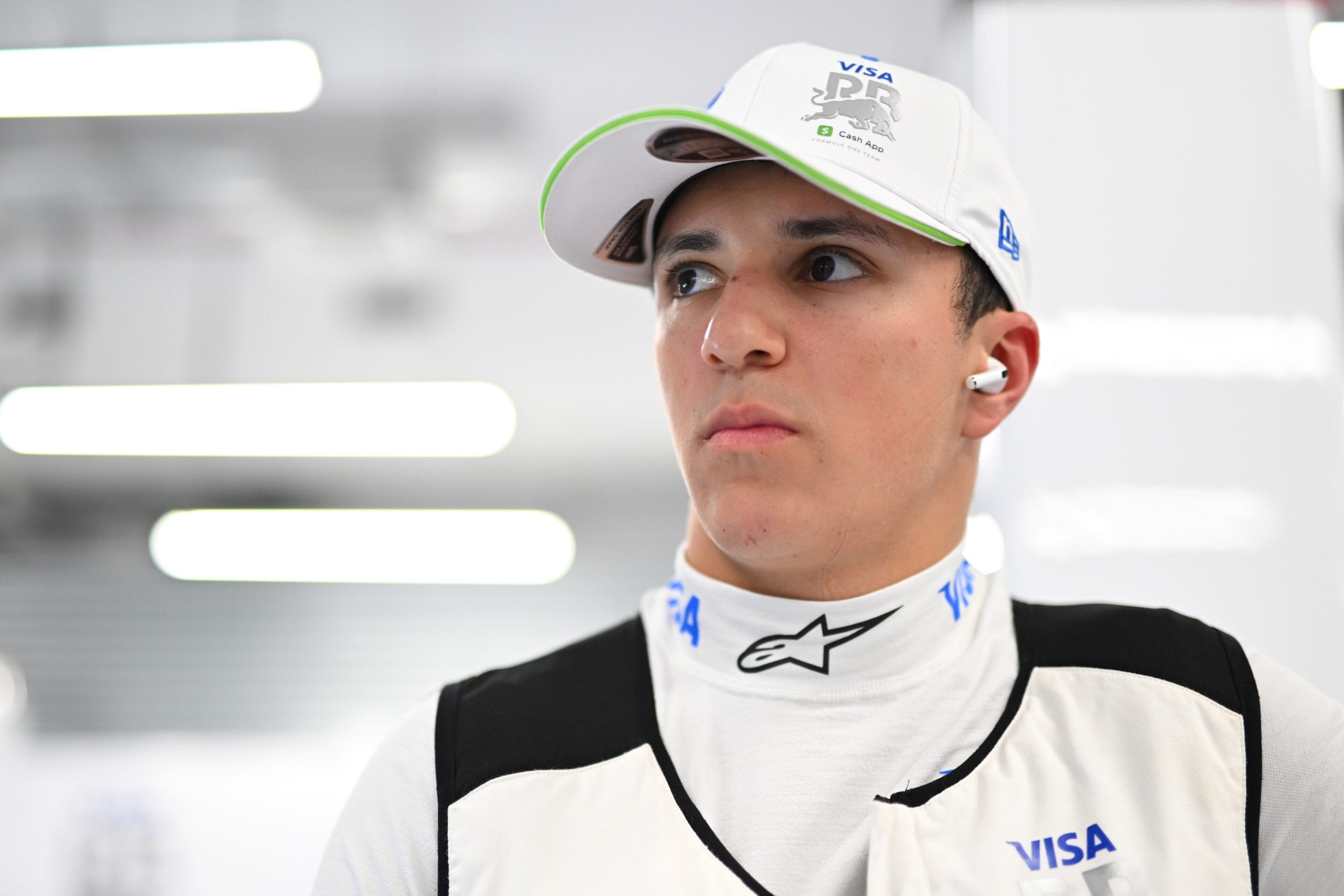
Isack Hadjar’s getting the dream promotion. Red Bull Racing for 2026. Partnering Max Verstappen. Learning from the best. Working alongside a four-time world champion. How absolutely brilliant for his career development. And how utterly terrifying for his mental health.
The Frenchman crashed out on the formation lap in Australia. Cried his eyes out. Then delivered one of the most impressive rookie campaigns in recent memory, culminating in a podium at Zandvoort. Now Red Bull’s rewarding him with a front-row seat to the Max Verstappen masterclass. Which historically means watching your career prospects evaporate whilst your teammate wins everything.
Because nothing says “we believe in you” quite like throwing you into the deep end alongside the most comprehensively dominant driver of his generation. Good luck with that, Isack.
The Promotion Nobody Saw Coming (Except Everyone)
Red Bull made it official on Tuesday. Hadjar’s moving up. Yuki Tsunoda’s becoming a test driver after five years of failing to convince anyone he deserved better. And 18-year-old Arvid Lindblad gets Hadjar’s Racing Bulls seat alongside Liam Lawson. Musical chairs, Red Bull style.
Laurent Mekies delivered the corporate spin with admirable enthusiasm. Hadjar’s shown “great maturity.” He’s a “quick learner.” Most importantly, he’s demonstrated “the raw speed that is the number one requirement in this sport.” Fair enough. The kid qualified ahead of Lawson 22 times out of 27. That’s properly impressive.
“We believe Isack can thrive alongside Max and produce the magic on track! 2026 will be a huge challenge for the team and for Red Bull Ford Powertrains.” – Laurent Mekies, Red Bull Team Principal
Thrive alongside Max. That’s optimistic language for what typically happens to Verstappen’s teammates. Has anyone actually thrived alongside him since Daniel Ricciardo left in 2018? Pierre Gasly didn’t thrive. Alex Albon didn’t thrive. Sergio Perez certainly didn’t thrive. And Tsunoda just spent most of 2025 finishing 15th in the championship whilst his teammate fought for titles.
But sure, Hadjar will be different. He’s got raw speed, after all.
When “Learning From Max” Becomes a Psychological Experiment
Hadjar’s delighted with his promotion, naturally. He’s expressed gratitude, pride, and excitement about working with “the best.” The enthusiasm’s genuine. The naivety’s adorable.
“It’s an awesome move to work with the best, and learn from Max is something I can’t wait for.” – Isack Hadjar
Can’t wait to learn from Max. Brilliant. Has anyone explained to him what that actually entails? It means getting comprehensively outqualified most weekends. It means watching telemetry that shows your teammate finding speed in places you didn’t know existed. It means team debriefs where everyone politely pretends your performance was acceptable whilst secretly wondering why you’re not faster.
Mike Hezemans reckons Hadjar’s got one crucial advantage over previous Verstappen victims. He’s “very good in qualifying.” Which apparently represents 80 per cent of your race result. That’s helpful, except Verstappen’s also very good in qualifying. And racing. And strategy execution. And pretty much everything else required to win.
Hezemans also stressed that Hadjar needs to manage expectations. Don’t dream about beating Max. Just accept you’ll finish behind him and stay relaxed. What inspirational career advice. “Lower your ambitions dramatically and hope for the best.”
The Advantage That Isn’t Really an Advantage
Hadjar does benefit from one legitimate circumstance working in his favour. New regulations arrive in 2026. Everyone starts fresh with completely different cars. No established baseline. No existing data advantage. Just two drivers figuring out new machinery simultaneously.
That theoretically levels the playing field. Except Verstappen’s spent his entire career adapting to regulation changes and dominating regardless. Remember 2022 when the ground effect rules arrived? He won the championship by 146 points. Remember 2025 when Red Bull’s car was distinctly average for half the season? He’s still fighting for the title in Abu Dhabi.
So yes, fresh regulations help. But they don’t fundamentally change the reality of partnering someone who’s comprehensively destroyed every teammate he’s had for seven years straight. As Helmut Marko probably should have mentioned during contract negotiations, alongside his miraculous belief in impossible title comebacks.
Tsunoda’s Five-Year Audition Ends in the Reserve Role
Poor Yuki Tsunoda. Five seasons in F1. Four years proving himself at Racing Bulls. One year alongside Verstappen that exposed every limitation he possesses. Now he’s a reserve driver, watching from the sidelines whilst Hadjar gets the opportunity he spent half a decade chasing.
Mekies delivered a gracious farewell statement praising Tsunoda’s development, personality, and contribution to the Red Bull family. All very diplomatic. All completely irrelevant when you’ve just scored 30 points whilst your teammate won seven races.
“Yuki has spent seven years racing in Red Bull colours and in his five seasons in Formula 1, Yuki has evolved into a complete driver who performs well on Saturday over one lap and on Sundays shows exceptional starts and excellent race craft.” – Laurent Mekies
Exceptional starts. Excellent race craft. Just not exceptional enough to justify keeping the seat when a 21-year-old rookie’s available. Harsh, but that’s F1. Especially at Red Bull, where sentiment takes a distant second place to performance.
Honda reportedly made Red Bull an offer to keep Tsunoda in the seat. Didn’t work. Which tells you everything about how thoroughly he failed to impress during his brief stint alongside Verstappen this season. When your engine supplier’s literally offering incentives to keep you employed and the team still says no? That’s properly damning.
Lindblad’s Rapid Promotion: The Pipeline Never Stops
Whilst Hadjar moves up, 18-year-old Arvid Lindblad slots into Racing Bulls alongside Lawson. The British teenager’s barely finished his rookie F2 season and he’s already getting an F1 seat. Red Bull’s talent pipeline doesn’t mess about.
Lindblad’s been marked as special since he was 12 years old, when he apparently led conversations with Helmut Marko about his career path. Because nothing’s more normal than a pre-teen discussing their F1 ambitions with one of motorsport’s most powerful figures. The kid won a Formula 3 race at Silverstone after overtaking about 14 drivers in treacherous conditions. Marko’s been obsessed ever since.
Now he gets a full season to prove whether the hype’s justified. If he succeeds, perhaps he’ll eventually graduate to Red Bull’s senior team. Where he can experience the joy of learning from Max Verstappen whilst his confidence slowly disintegrates. The circle of life, Red Bull style.
The “Magic” That Probably Won’t Happen
Mekies keeps using the word “magic” when discussing Hadjar and Verstappen’s potential partnership. It’s corporate optimism at its finest. Yes, Hadjar’s got talent. Yes, he delivered a brilliant rookie season. Yes, he thoroughly outperformed Lawson in qualifying.
But producing “magic” alongside Verstappen requires more than raw speed and qualifying prowess. It requires mental resilience when you’re consistently three-tenths slower. It requires accepting you’re the clear number two without letting it destroy your confidence. It requires maintaining motivation when every weekend reinforces that your teammate’s operating on a different level entirely.
Can Hadjar manage that? Maybe. He’s already demonstrated impressive mental strength by recovering from his Australian disaster to score a podium at Zandvoort. That takes character. But Carlos Sainz is currently scoring podiums for Williams whilst Lewis Hamilton struggles at Ferrari. Talent and mental strength don’t always translate when circumstances change dramatically.
When the Dream Promotion Becomes a Nightmare
Here’s the uncomfortable truth. Hadjar’s promotion is simultaneously the best thing that could happen to his career and potentially the worst. If he performs well, he’s established himself as a legitimate F1 talent capable of competing at the highest level. If he struggles, he becomes another name on the list of drivers who couldn’t handle the Verstappen comparison.
There’s no middle ground at Red Bull. You’re either fast enough or you’re not. And “fast enough” means something completely different when your reference point is a four-time world champion who’s won 65 races and counting. Just ask Gasly, Albon, or Perez how that worked out.
The 2026 regulations represent Hadjar’s best chance. Everyone starts fresh. Perhaps he can establish himself before Verstappen figures out the new formula. Perhaps the machinery will suit his driving style better than expected. Perhaps Red Bull’s gamble on youth and raw speed will pay off spectacularly.
Or perhaps we’ll spend 2026 watching another talented rookie discover that “learning from the best” actually means watching your dreams evaporate one qualifying session at a time. With plenty of championship standings updates documenting the carnage along the way.
Either way, it’ll be fascinating to watch. And probably quite painful for Hadjar. But that’s the price of partnering greatness. You either rise to the challenge or you become a cautionary tale. No pressure, Isack. Just go out there, stay relaxed, and definitely don’t dream about actually beating Max. That way lies madness.