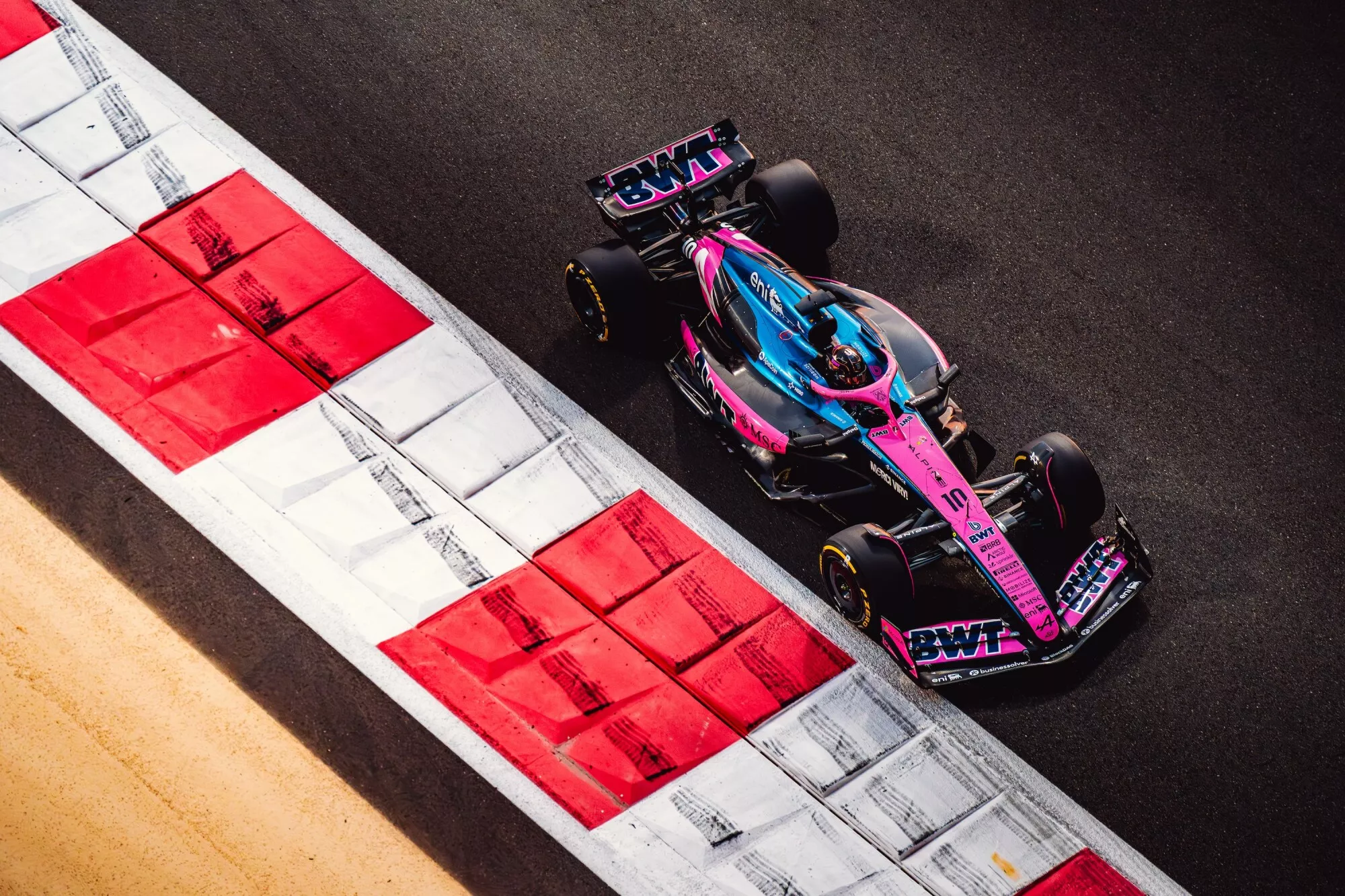
Pierre Gasly reckons he spent the entire 2025 season staring into a tunnel. A very long, very dark tunnel where Alpine finished dead last in the constructors’ championship with a magnificent 22 points. But don’t worry. The Frenchman could always see “the light at the end” because Alpine’s 2026 project will definitely fix everything. Because nothing says credible optimism quite like a driver who just endured his lowest-scoring season promising the next one will be different, does it?
Fair play to Gasly for maintaining enthusiasm whilst his team collected fewer points than Haas and Racing Bulls. The 29-year-old was literally the only Alpine driver to score all season. Franco Colapinto and Jack Doohan managed precisely zero between them. That’s the kind of team performance that usually triggers existential crises, not corporate optimism about hitting development targets.
But Alpine’s banking everything on 2026’s regulatory reset. New chassis rules. Mercedes power units replacing those expensive Renault engines that delivered absolutely nothing. A customer supply from the German manufacturer that just helped McLaren win the championship. Surely that’ll solve the fundamental issues that saw them finish behind teams with half their budget?
When Abandoning Your Engine Programme Becomes Your Selling Point
Here’s what Alpine actually did in 2025. They looked at their Renault power units, calculated the development costs, acknowledged the performance was rubbish, then decided to completely abandon their works status. That’s right. A manufacturer-backed team admitting they can’t build competitive engines anymore. Revolutionary strategy from a team that won three constructors’ championships under previous guises.
The Viry-Châtillon facility that’s built F1 engines for decades? Binned. All resources now channelled into chassis development whilst Mercedes supplies the power. That’s either a pragmatic admission of failure or the most expensive white flag in motorsport history. Probably both.
“I’ve just tried to really take every single weekend one after another, without really having too many expectations. What has helped me a lot is, it was a very long tunnel the whole season, but knowing what we’re doing for 2026 I’ve always had that sort of light.” – Pierre Gasly
That’s properly vulnerable from someone who just scored the fewest points of his F1 career. Gasly admits 2025 delivered zero satisfaction despite what he considers a strong personal performance. Which is fair assessment when you’re the only driver scoring for a team that’s essentially given up on the current season by April.
Alpine stopped developing the 2025 car early to focus entirely on 2026 regulations. That’s a bold gamble when you’ve got two seasons to endure. One where you’re comprehensively terrible because you’ve abandoned development. Another where your revolutionary new project might not actually work because nobody’s tested these regulations properly yet.
The Mercedes Gamble Nobody’s Questioning Enough
Gasly’s “very optimistic” about Alpine’s 2026 package. Everything’s looking good. They’re hitting all their targets. The Mercedes power unit will definitely be competitive. That’s lovely corporate enthusiasm from someone whose team just finished 10th out of 10 teams.
“Chassis side, engine-wise, I think everything is looking good. We’re hitting all our targets. So yeah, I’m very excited for ’26.” – Pierre Gasly
Here’s the uncomfortable question. What exactly are those targets? Being less catastrophically terrible than 2025? Scoring more than 22 points? Actually having both drivers contribute to the tally? These are pretty low bars when you’re supposedly aiming for F1’s midfield.
Mercedes supplied four teams with engines in 2025. McLaren won the championship. Mercedes themselves finished second. Aston Martin and Williams made up the numbers in the midfield. That’s quite the performance spread from identical power units. Which suggests that whilst Mercedes engines might be competitive, Alpine’s chassis work needs to be absolutely spectacular to matter.
The Frenchman insists targets are being met, but as he correctly points out, nobody actually knows what rivals consider the benchmark yet. Ferrari might’ve found 50 horsepower nobody expected. Red Bull could’ve nailed the active aero system. Honda’s integration with Aston Martin might deliver something properly competitive. Alpine’s hitting their internal targets whilst potentially being miles behind everyone else’s.
When Your Back Stops Hurting But Your Results Still Do
Gasly’s properly relieved about one aspect of 2026. The ground effect cars that destroyed drivers’ spines for four years are finally getting binned. The porpoising, the stiff suspension, the brutal physical toll. All gone as regulations shift towards something theoretically more manageable.
The current generation demanded cars run millimetres from the ground to generate maximum downforce. That created violent bouncing on straights and compression forces that left drivers with serious back problems. Gasly admits it’s been “enormously heavy” on their bodies and “not sustainable over an entire career.” Fair assessment from someone who’s completed eight full F1 seasons.
But here’s the properly awkward reality. Those same ground effect regulations delivered some brilliant racing over recent years. Yes, Qatar 2025 was dire. But we’ve also witnessed genuine wheel-to-wheel combat and unpredictable results. Will 2026’s completely unknown formula improve the spectacle or create processional nonsense where active aero and energy management dominate actual racing?
Gasly’s diplomatic about the uncertainty. Drivers need to be “open-minded” about what’s coming. But his priority remains unchanged: fighting at the front. He’s approaching his ninth full F1 season with just one career victory. That’s the frustration driving this optimism about Alpine’s reset.
The Colapinto Partnership Nobody’s Convinced About Yet
Alpine’s retained Colapinto alongside Gasly for 2026. That’s stability on the driver front after the Jack Doohan experiment lasted precisely seven races before getting abandoned entirely. The Argentine rookie showed flashes during his Williams stint in 2024, enough to convince Alpine he deserves a proper opportunity.
Colapinto’s convinced next year’s car will be “better than this year’s.” Which is possibly the safest prediction anyone could make considering 2025’s Alpine was comprehensively dreadful. Improvement from dead last isn’t exactly a bold claim. Literally any forward progress constitutes success.
The young driver admits simulations look promising but acknowledges nobody knows until cars actually hit the track. That’s refreshingly honest from someone whose F1 career nearly ended before properly beginning. He’s got one season to prove Alpine’s faith wasn’t misplaced.
When “Tough Choices” Mean Abandoning an Entire Season
Gasly’s fully backing Alpine’s decision to sacrifice 2025 for potential 2026 gains. If it delivers better results next year, he “literally does not care” about the season just completed. That’s brutal honesty about priorities. One year of embarrassment becomes acceptable if it creates a head start over rivals.
“If it gives me better results next year, I literally do not care about this season and it will be all worth it. Because the reality is what we could have fought for this year is still not good enough for us.” – Pierre Gasly
Fair logic, actually. Alpine weren’t competing for championships in 2025. Even with full development, they’d have struggled for midfield points. So why not gamble everything on regulations that offer genuine opportunity for reshuffling the competitive order?
Except that gamble assumes Alpine’s 2026 project actually works. That Mercedes engines integrate perfectly. That chassis development delivers performance nobody else has found. That active aero systems function reliably. That’s a lot of assumptions for a team that just finished last whilst making “tough choices” about their future.
The 2026 season starts in Melbourne on March 8th. That’s when we discover whether Gasly’s tunnel actually had light at the end or if Alpine just convinced themselves optimism counts as a development strategy. Barcelona testing from January 26th will provide the first proper indication of whether this Mercedes partnership delivers anything beyond corporate press releases about hitting targets.
Until then, Gasly’s maintaining his enthusiasm. Nine years in F1. One victory. Countless promises about next season being different. Perhaps 2026’s regulatory reset genuinely offers Alpine the opportunity they desperately need. Or perhaps we’re about to watch another year of French optimism colliding with uncomfortable reality whilst Mercedes-powered McLarens disappear into the distance again.