Remember when Jordan’s 7UP-sponsored livery actually meant something? That iconic green-and-blue monster from 1991 that launched Michael Schumacher’s career? Well, PepsiCo’s back in Formula 1, this time slapping Gatorade, Doritos, and Sting logos all over Mercedes. Because what Russell and Antonelli really need after Hamilton’s Ferrari nightmare is sports drinks, crisps, and energy beverages, apparently.
The $92 Billion Company Returns After 34 Years
PepsiCo generated nearly $92 billion in revenue last year. That’s enough cash to buy every F1 team twice over. And where do they choose to plant their flag? Mercedes. Not Red Bull, despite the obvious energy drink synergy. Not McLaren, despite their recent resurgence. The Silver Arrows, who’ve spent 2025 scrapping for second place whilst Verstappen and McLaren battled for glory.
The deal brings three brands under one roof: Gatorade for “performance solutions,” Sting for those crucial Gen Z fans who apparently need their own energy drink, and Doritos for… well, for crisps. Nothing screams cutting-edge motorsport quite like nacho cheese-flavoured triangles.
This marks PepsiCo’s first proper team sponsorship since that legendary Jordan partnership ended after just one season. They had a marketing arrangement with Williams in 2002, but that was barely worth mentioning. No car branding, no team gear. Just 7UP being the “official soft drink partner” whilst Williams struggled through one of their forgettable seasons.
When Sports Science Meets Sponsorship Desperation
The real comedy gold? Gatorade’s Sports Science Institute is apparently joining the paddock to provide “performance solutions” for Mercedes. Because Formula 1 teams, with their multi-million-pound budgets and decades of accumulated expertise, desperately needed PepsiCo to explain hydration to them.
“Gatorade’s expertise in sports science, Sting’s youthful energy, and Doritos’ cultural relevance each bring something unique.” – Toto Wolff
Doritos’ cultural relevance. Let that sink in. The man who masterminded Mercedes’ eight consecutive constructors’ championships is now publicly celebrating the cultural significance of crisps. This is where we are now.
Fair enough, drivers can lose up to four kilograms through sweat during races. That’s properly brutal. But did Mercedes really need Gatorade’s Sports Science Institute to work that out? Have they been handing Russell and Antonelli lukewarm tap water until now?
The Activation Rights Nobody Asked For
PepsiCo already struck a deal with F1 itself earlier this year, running until 2030. Gatorade sponsors the sprint races. You saw their logos plastered everywhere during Qatar’s sprint weekend. Now they’ve extended that reach directly into Mercedes’ garage.
Sting brings its “youthful energy” to help Mercedes penetrate new markets. Presumably markets where teenagers need another caffeinated beverage option because Red Bull, Monster, and the seventeen other energy drinks weren’t quite enough.
Doritos gets social media activation rights. Expect behind-the-scenes content featuring Russell and Antonelli munching crisps whilst pretending this partnership makes perfect sense. Fan-focused activations. Commercial activities. All the corporate buzzwords you’d expect from a deal this size.
“Through Gatorade, Sting, and Doritos, we’re inside the culture of the sport, fuelling both the athletes and the fans who live for the thrill of F1.” – Eugene Willemsen, PepsiCo CEO
Inside the culture of the sport. That’s ambitious phrasing for a company whose last significant F1 involvement ended when Michael Schumacher was still a rookie at Benetton.
The Branding Mystery Continues
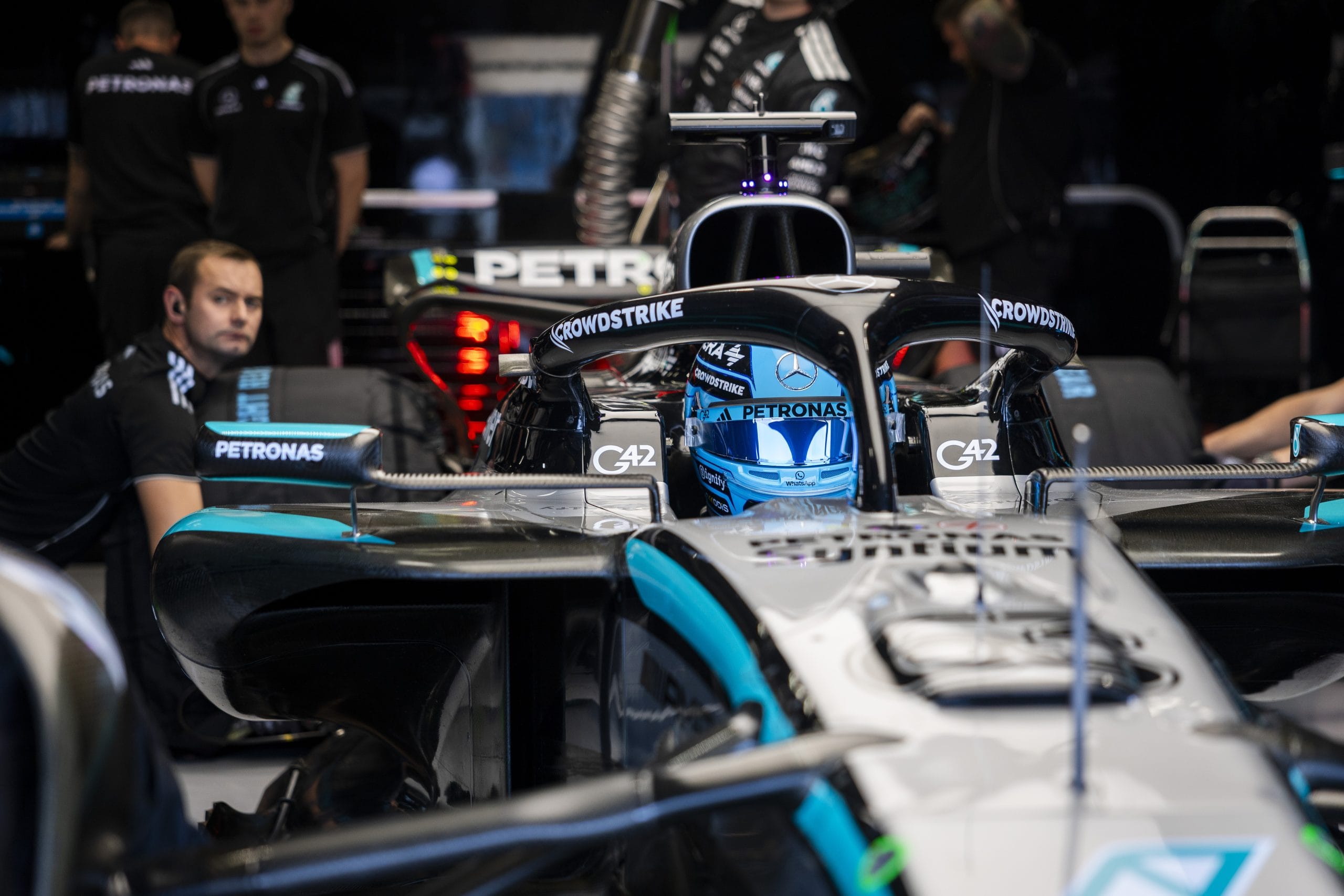
Here’s the interesting bit: nothing’s finalised regarding how PepsiCo’s branding actually appears on Mercedes cars, driver overalls, or team wear. They’ve announced this massive partnership without confirming the most basic visual elements. Brilliant planning, that.
Will we see Gatorade bottles replacing the usual sponsor slots on the engine cover? Doritos logos on Russell’s helmet? Sting branding on the rear wing? Nobody knows yet. Discussions are “still going on.” Which suggests this deal was announced before anyone actually worked out the practical details.
The timing’s curious too. This kicks off in 2026, precisely when F1’s new regulations arrive. Mercedes is betting heavily on their new power unit being dominant. They’ve restructured their operation, signed Antonelli as their future, and now they’re welcoming PepsiCo into the fold just as everything changes.
When Nostalgia Meets Modern Commercial Reality
That 1991 Jordan 191 livery remains one of F1’s most beloved designs. The bright green and blue. The 7UP logos proudly displayed. The underdog team punching above their weight. It represented everything brilliant about privateer racing teams with creative sponsorships.
This Mercedes deal? It’s the corporate opposite. Three established brands joining the most successful team of the modern era. There’s no romance here. No risk. Just a massive multinational parking its portfolio alongside a team desperate for commercial partners after losing several high-profile sponsors recently.
Mercedes boss Toto Wolff called it “another sign of the strength of our team and our sport.” Which is diplomatic language for “we needed the money and they were willing to pay.” After battling Red Bull for second place all season whilst Hamilton imploded at Ferrari, Mercedes needs all the commercial firepower they can muster.
The Questions Nobody’s Asking
Will Gatorade’s hydration expertise actually improve Mercedes’ performance? Doubtful. Will Sting’s “Gen Z fans” suddenly start watching F1 because their energy drink sponsors a team? Unlikely. Will Doritos’ cultural relevance translate into faster lap times? Absolutely not.
But will PepsiCo’s $92 billion empire provide Mercedes with crucial funding heading into new regulations? Definitely. And that’s what this deal actually represents. Not innovation or performance enhancement. Just cold, hard cash changing hands whilst both parties pretend it’s about shared values and sporting excellence.
PepsiCo returns to Formula 1 after three decades. Mercedes welcomes them with open arms. And somewhere in heaven, the ghost of that gorgeous Jordan 191 weeps quietly into its fizzy beverage.