
Monza, the temple of speed, is about to spend a weekend pretending to be slow. Thanks to F1’s energy-starved 2026 power units, the fastest circuit on the calendar is heading for a race built not around raw horsepower but around who can nick a tow off whoever’s daft enough to lead. Aston Martin’s Mike Krack thinks it will be glorious chaos. Others think it will just be chaos.
Krack’s MotoGP Prediction
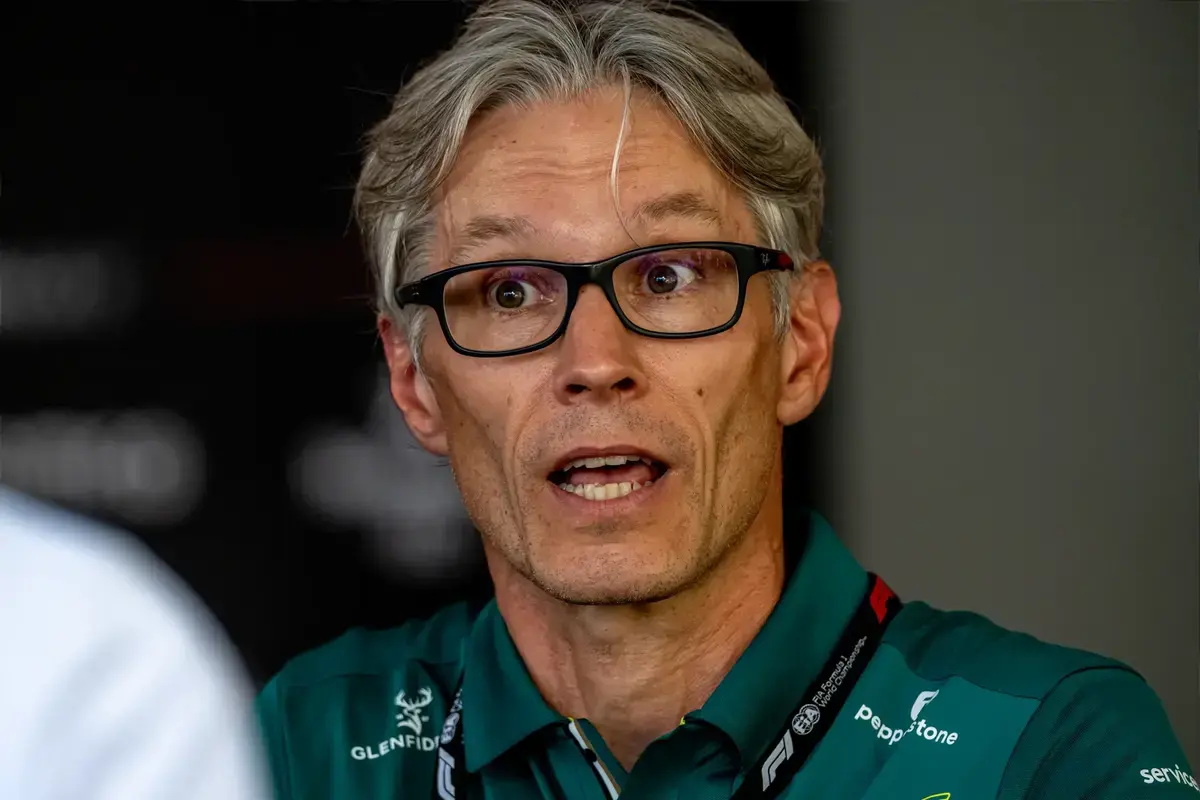
Speaking to media at Monza on Thursday, Aston Martin‘s trackside chief Mike Krack said the combination of minimal energy deployment and a track built entirely around straights and braking zones will push slipstreaming to the front of everyone’s strategy, in qualifying and in the race itself.
“I think the lack of energy basically that you have here over the qualifying lap will manifest itself in people looking for that [tow]. I hope we will not have a situation like 2019. Certainly not in Q1, but who knows what will happen? Nobody wants to be first [on the road], probably. But I think there will be more of this than we have seen in recent years.” – Mike Krack
Krack, never one to dress things up more than necessary, went further still, suggesting the race could produce an overtaking record unlike anything Monza has seen, largely because nobody will have enough power to simply drive away from a rival.
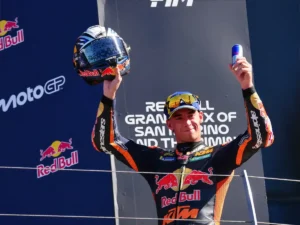
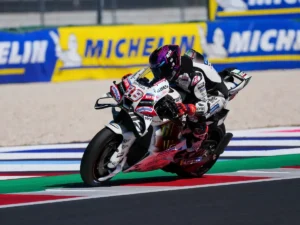
“Especially the passing and re-passing games probably will be a record of all time here, more like MotoGP.” – Mike Krack, as reported by Crash.net
He also flagged the operational headache this creates. It is one thing to build a model predicting how big the tow effect will be. It is quite another to actually execute it on Sunday, when getting into a following position at the right moment matters as much as the raw numbers on a spreadsheet.
“It will definitely be an interesting exercise to validate your models, but also to see how operationally you manage it, because it’s one side to say the effect is big or the effect is small, but also you have to be in a position to get to follow someone.” – Mike Krack
Why Monza of All Places
There’s something almost comic about this happening at Monza specifically. This is the circuit where, for decades, the entire point was to build the biggest engine and let it scream to the moon down the Rettifilo. Now the FIA has slashed the harvesting limit to 4MJ per lap, the lowest of the season, and suddenly the temple of speed is a puzzle about who can borrow the least amount of nothing most efficiently.
Lewis Hamilton put it bluntly when discussing the change: cars will arrive into the braking zones significantly slower than in previous years, robbing Monza of the sensation that made it special in the first place. The engine screaming all the way to the braking zone, a Monza signature for half a century, simply won’t happen this weekend.
Not everyone agrees the reduced harvest limit is bad news, though. Kimi Antonelli, who arrives at Monza leading the championship despite starting the weekend from the back of the grid due to a penalty, said simulator running left him more optimistic than expected, with less of the dangerous “super clipping” speed discrepancy that plagued tracks like Spa earlier this year. Haas’ Esteban Ocon backed that up, noting drivers won’t be forced into the lift-and-coast routine some had feared.
Not Everyone’s Convinced
Alpine’s Franco Colapinto, who has made a habit of saying the unglamorous thing out loud, reckons Monza will expose the worst of the current regulations regardless of the lower harvest limit. He called it “another track that shows our weaknesses as Formula 1”, which is not exactly the marketing line F1 wants going into one of its most historic weekends.
But it’s Racing Bulls rookie Arvid Lindblad who delivered the bleakest verdict of all, and his logic is hard to dismiss. Krack’s overtaking theory relies on speed deltas, cars catching each other because they’ve deployed energy differently. Lindblad’s argument is that at Monza there simply isn’t enough energy in the system for meaningful deltas to exist at all.
“I don’t think there’s going to be much speed delta, because no one’s going to have any power. It’s not like on other tracks where it depends where you spend it. We just have no power.” – Arvid Lindblad, as reported by Autosport
Lindblad’s point about the track layout is the killer detail. Spa, he explained, has two long straights but plenty of corners in between where cars can recharge. Monza effectively strings together four long straights with barely a corner to harvest in, meaning there’s nothing left to spend. His prediction for the racing product was refreshingly grim.
“You could call it yo-yo racing, but I just think it would be really bad yo-yo racing. I don’t know what to expect, but I’m not very optimistic.” – Arvid Lindblad
Two Theories, One Sunday
So there are, essentially, two competing visions of Monza 2026 doing the rounds in the paddock. Krack’s version has drivers hunting for tows all weekend, cars swapping places lap after lap in a frenzy that would make a MotoGP grid proud. Lindblad’s version has everyone converging on the same conservative deployment strategy because there’s genuinely no other option, producing a procession dressed up as chaos.
Both can’t be entirely right, but that’s rather the fun of it. What’s certain is that nobody should be setting an alarm for a top speed record this weekend. Lindblad was explicit that anyone betting on speed trap history at Monza is wasting their money, given cars simply won’t have the battery reserves to hit the numbers this circuit is famous for.
The irony writing itself here is hard to ignore. F1’s regulators built a power unit rulebook designed to make hybrid deployment more spectacular, and the unintended consequence at the sport’s most old-school circuit is a race that might resemble a motorcycle slipstream battle more than a Formula 1 grand prix. Whether that turns into thrilling unpredictability or, as Lindblad fears, a slow procession dressed up in exciting language depends entirely on how the teams actually execute their models on Sunday, not on how confidently Krack talks about it on Thursday.
Qualifying gets under way on Saturday at 14:00 UTC, with the race following on Sunday at 13:00 UTC, check the calendar for your local time. If Krack’s right, it’ll be worth watching purely for the spectacle. If Lindblad’s right, it’ll be worth watching purely to see who’s proven correct.