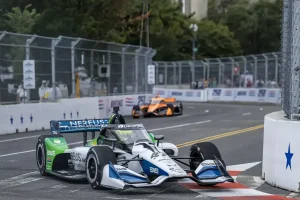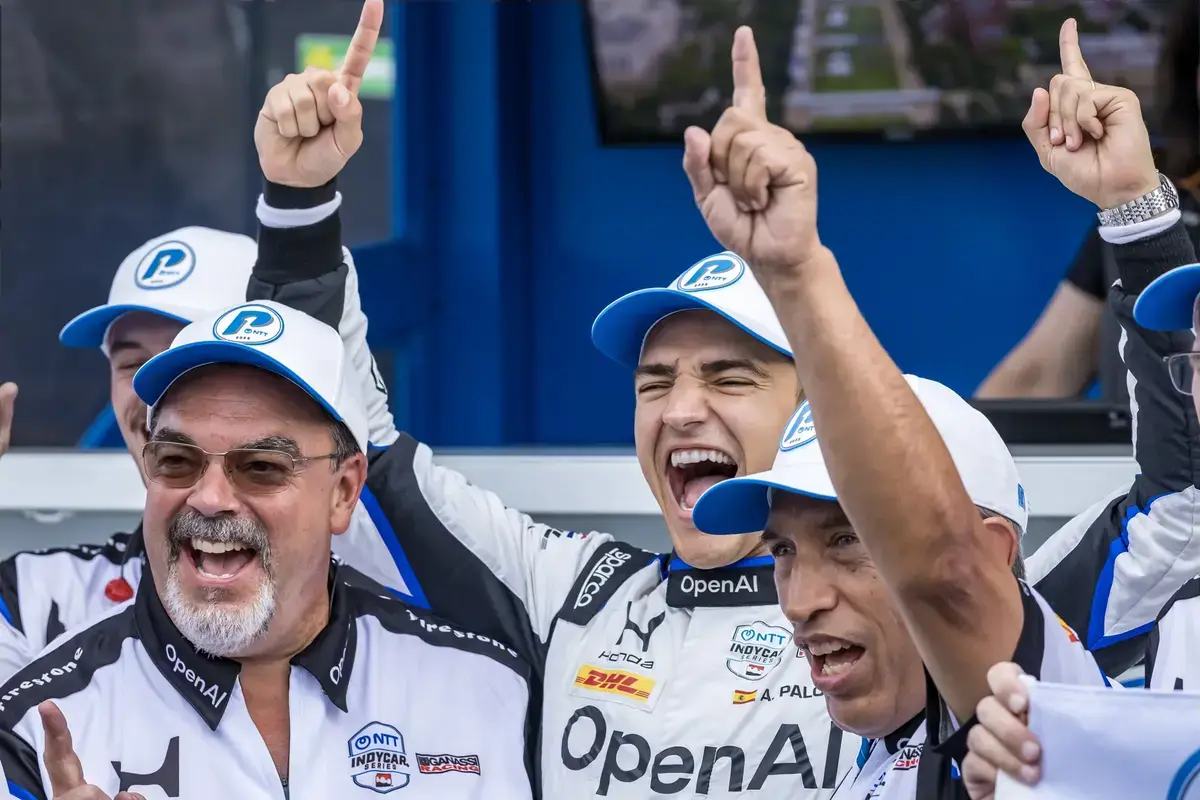

While Formula 1 spends its days arguing about grid penalties and wing failures, Alex Palou has been busy doing something rather more impressive on the other side of the Atlantic: winning. Again. The Chip Ganassi Racing driver has sealed his fifth IndyCar championship, and his fourth in a row, a feat that puts him in genuinely rarefied company.
Palou wrapped up the title with a race still to spare, which tells you everything about the size of his advantage this season. It came courtesy of a fifth-place finish in the second race of a Milwaukee Mile double-header, oddly labelled Race 1 after Saturday’s rain forced a reshuffle that saw it completed on Sunday following Race 2, where Palou finished 10th. Confusing scheduling aside, the maths was simple enough: his closest rival Kyle Kirkwood needed a win and a specific points swing to keep the title race alive into the Laguna Seca finale. Kirkwood didn’t get it, and Palou didn’t need to.
A Streak That Belongs in the Conversation
Winning one IndyCar title is an achievement. Winning five in six seasons is the kind of run that stops being a hot streak and starts being a statement. Since joining Ganassi in 2021, Palou has missed out on the championship exactly once, in 2022, when he finished fifth as Will Power took the crown. Every other year, it has been Palou’s name on the trophy.
That run of 2023, 2024, 2025 and 2026 titles now equals Sebastien Bourdais’ record of four consecutive US open-wheel championships, a mark the Frenchman set between 2004 and 2007 in the old Champ Car World Series, born out of the CART split. Since CART and the IndyCar Series reunified in 2008, nobody has matched four in a row until now. Scott Dixon’s three-peat between 2009 and 2011 had stood as the benchmark of the modern era. Palou has now gone one better.
Standing Alone on the All-Time List
Palou had previously been level with Mario Andretti, Bourdais and Dario Franchitti on four career titles apiece. That group now sits behind him. He has moved to third on the all-time list, trailing only A.J. Foyt’s seven titles and his own outgoing Ganassi team-mate Scott Dixon, who is closing out a stint of nearly a quarter of a century in the number 9 car before heading to McLaren for the following season.
There is something almost unfair about the timing. Palou has essentially waited for Dixon to book his ticket out of Ganassi before quietly assembling a case for being the best of his generation in American open-wheel racing. Five titles in six years is not a fluke, and it is not a case of one dominant car either, given IndyCar’s spec chassis and tightly controlled technical regulations make sustained individual dominance considerably harder to manufacture than it can be in Formula 1.
Why This Should Sting a Bit in F1 Circles
It is worth pausing on that contrast. Formula 1 in 2026 has been billed as a wide-open new-regulations season, and the standings back that up on paper, with Kimi Antonelli leading a genuine four-way scrap involving George Russell, Lewis Hamilton and Lando Norris. Chaos and unpredictability are being sold as a feature, not a bug. Meanwhile, in a series with spec cars and a grid packed with genuine race winners, one driver has simply refused to lose more than once in six years. Dominance, it turns out, is still possible even when the playing field is supposedly levelled. It just requires being better than everyone else, rather than complaining about the tools.
None of this is to suggest IndyCar is a better spectacle than Formula 1, that argument can be had elsewhere, and probably has been, loudly, on social media. But there is something refreshing about a title race being settled by relentless consistency rather than a paddock-wide inquest into a technical directive. Palou’s rivals, Kirkwood included, were not blaming regulations or strategy calls for missing out. They were beaten, plainly and repeatedly, by a driver operating on another level.
What Comes Next
With the title wrapped up early, the remaining IndyCar rounds, including the Laguna Seca finale, now become something of a formality for Palou, though there will still be plenty on the line for those chasing minor placings and bragging rights. For Ganassi, the achievement caps a season in which the team has had to manage the emotional business of bidding farewell to Dixon while simultaneously building a case that its next era, led by Palou, might be even more dominant than the last.
Formula 1 fans scrolling past this story between arguments over grid penalties at Monza or the latest engine politics might reasonably ask why their own sport, stuffed with budget caps and cost controls designed to close the field up, still cannot produce this kind of sustained individual brilliance without a small handful of teams hoovering up every trophy. Palou has just answered that question from several thousand miles away, and he did not need a single press conference about tyre pressures to do it.