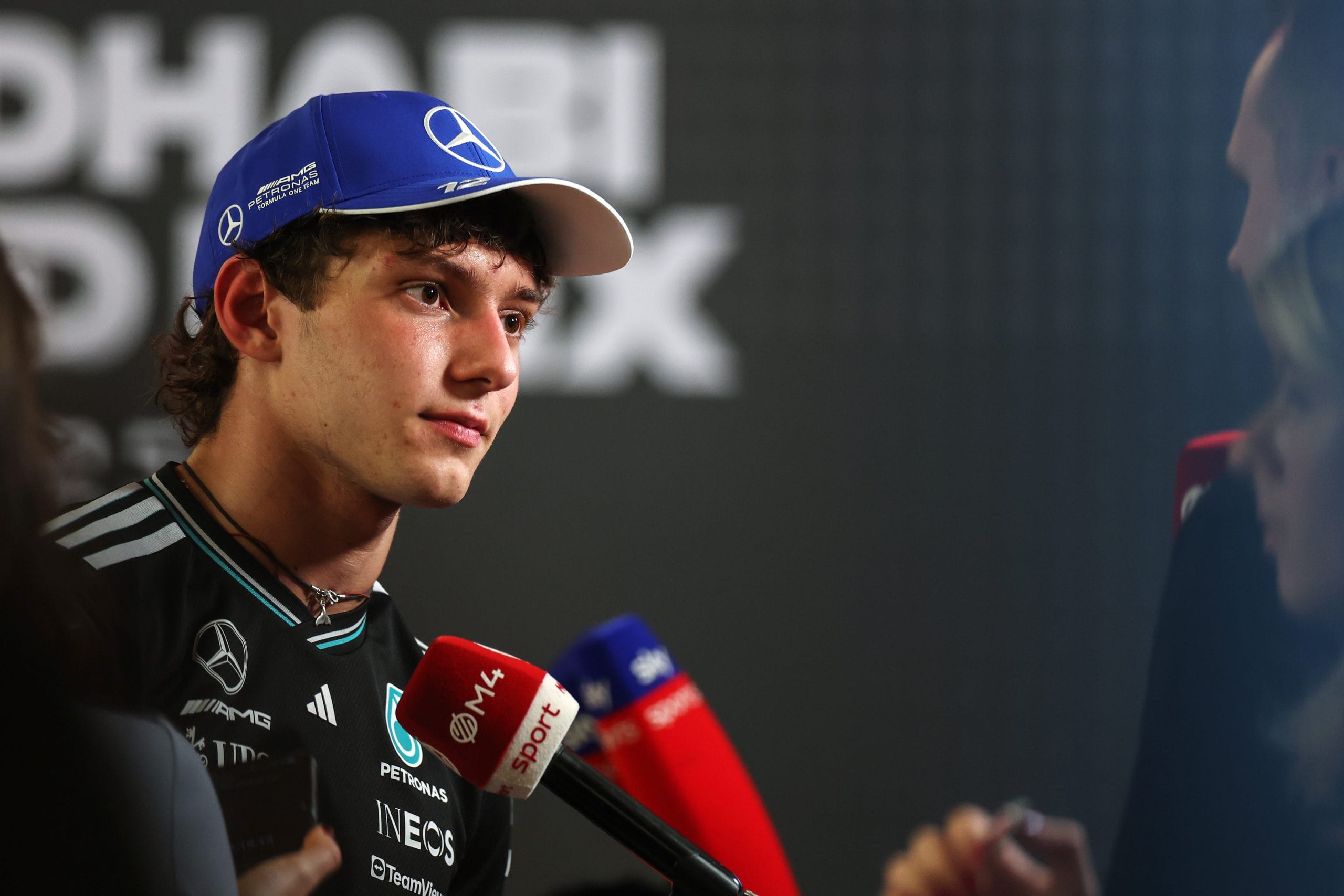

So Kimi Antonelli just spent his rookie Formula 1 season as Mercedes‘s unwitting test subject. The Italian teenager reckons the team’s catastrophically misjudged suspension change at Imola cost him “two or three months” of development. Because nothing says “we’ve got your back” quite like bolting experimental components onto your rookie’s car then watching his form collapse whilst your experienced driver somehow copes, does it?
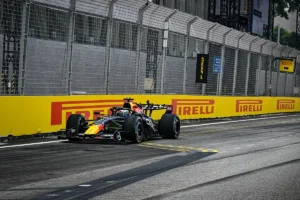
Mercedes introduced a tweaked rear suspension geometry at the Emilia Romagna Grand Prix back in May. The goal? Fix their rubbish low-speed performance and rear tyre temperature issues by copying McLaren’s dominant MCL39. The result? Instability that sent Antonelli’s confidence into freefall whilst George Russell managed to drive around the problems through sheer experience.
Fair play to Antonelli for admitting the truth. Most rookies would blame themselves entirely whilst their teams issue vague statements about “learning curves.” The 19-year-old’s calling out exactly what happened. Mercedes gambled on an upgrade that didn’t work, stuck with it too long, and watched their rookie struggle for months before finally reverting to something driveable.
When Copying McLaren Backfires Spectacularly
Here’s what actually went wrong. Mercedes looked at McLaren’s championship-winning car and thought “let’s have some of that.” Introduced a revised rear suspension geometry designed to improve low-speed corners and generate better tyre temperatures. Brilliant theory. Catastrophic execution.
The update introduced instability at the rear end. Russell, with his years of experience and ability to adapt his driving style, could mask the issues well enough to remain competitive. Antonelli? Not remotely. The rookie had enjoyed a promising start to his season. Then Imola arrived and everything collapsed.
“I think I’ve lost a good two or three months of progress. Obviously, I struggled with the rear end more than George. I struggled more to adapt, mainly to do my driving style.” – Kimi Antonelli
That’s properly vulnerable from someone who just endured the most difficult period of his debut season. Antonelli’s admitting he couldn’t adapt quickly enough whilst his teammate managed the same problematic car. But here’s the uncomfortable question Mercedes won’t answer: why persist with a specification that was clearly destroying your rookie’s confidence?
The Confidence Death Spiral Nobody Stopped
Antonelli’s description of those months is genuinely uncomfortable. Kept losing confidence. Driving “super tense.” Struggling to make any progress whatsoever. That’s not just technical difficulty. That’s psychological damage from racing machinery you can’t trust.
“It was a difficult period because I just kept losing confidence, driving super tense and I just really struggled to make any progress. And obviously if I either was able to adapt better or if either I would have gone back earlier to the suspension, probably it would have been a bit different, and I would have been able to build momentum already at the end of the European season or halfway through it.” – Kimi Antonelli
Notice what he’s saying? If Mercedes had reverted the suspension changes earlier, he could’ve rebuilt momentum halfway through the European season instead of waiting months. That’s diplomatic language for “my team persisted with a failed experiment far too long whilst I suffered the consequences.”
The Italian finished seventh in the championship with 150 points and three podiums. Respectable rookie numbers. But how much better could those results have been without three months of struggling with unstable machinery that eventually got abandoned anyway?
Russell’s Experience vs Antonelli’s Inexperience: The Gap That Matters
Here’s the properly awkward element. Russell managed to drive around the suspension issues. Antonelli couldn’t. That experience gap between a five-year veteran and a rookie teenager became painfully obvious when problematic upgrades arrived.
Russell’s collected five career wins across 152 races. He knows how to adapt his driving style when machinery behaves unexpectedly. Antonelli’s in his first season after just 24 career grands prix. He’s still building that database of sensations and solutions that experienced drivers access instinctively.
Mercedes’s trackside engineering director Andrew Shovlin admits Antonelli’s single-lap performance required the most work. Long runs were strong immediately. But qualifying? That took months to develop properly.
“We expected long runs to be the hardest, but he was strong there immediately. Single-lap performance took more work. Learning to trust the tyres and generate temperature early was key.” – Andrew Shovlin
Fair assessment. Except trusting tyres becomes rather difficult when your car’s rear end is behaving unpredictably because of suspension geometry that doesn’t actually work. Perhaps reverting those changes earlier might’ve accelerated Antonelli’s qualifying development?
The Learning Curve That Shouldn’t Have Been This Steep
Shovlin’s properly diplomatic about Antonelli’s development trajectory. Praises his ability to describe what the car’s doing. Notes he’s building a “database of cause and effect” with setup changes. Highlights that once he learns something, it sticks.
All lovely corporate positivity. But Shovlin also admits Budapest saw Antonelli “overcook it” whilst later in the season he sometimes pushed too hard in Q3 after strong Q1 and Q2 performances. Those are rookie mistakes that might’ve been avoided if three months hadn’t been spent fighting unstable machinery instead of actually developing racecraft.
“He now understands the flow of a race weekend much better. His ability to describe what the car is doing has always been strong, which is one of the most important things. Over time, he’s building a database of cause and effect with setup changes.” – Andrew Shovlin
What Shovlin’s carefully not saying is that persisting with failed suspension upgrades whilst your rookie struggled was spectacularly poor team management. Antonelli’s talent was never in question. Mercedes’s decision-making absolutely was.
The 2026 Reset: When Everyone Starts Fresh
Perhaps the suspension disaster doesn’t matter long-term. The 2026 season brings revolutionary regulation changes. Active aerodynamics. Completely different power units. New chassis designs. Everyone starts from zero.
That’s Antonelli’s opportunity for redemption. No comparisons to 2025’s struggles because the machinery will be unrecognisable. If Mercedes gets their 2026 car right whilst rivals stumble, the Italian teenager could finally show his potential without battling experimental upgrades that destroy confidence.
Shovlin insists they’re “very much on track” with Antonelli’s development. Which sounds reassuring until you remember they just admitted costing him three months of progress through poor technical decisions. But at least the rookie’s honest about what happened rather than pretending everything was brilliant learning experience.
Three months. That’s how long Mercedes persisted with a suspension configuration that clearly wasn’t working for their rookie driver. Will 2026 bring better decision-making? Or will Antonelli spend another season as the team’s unwilling development test case?