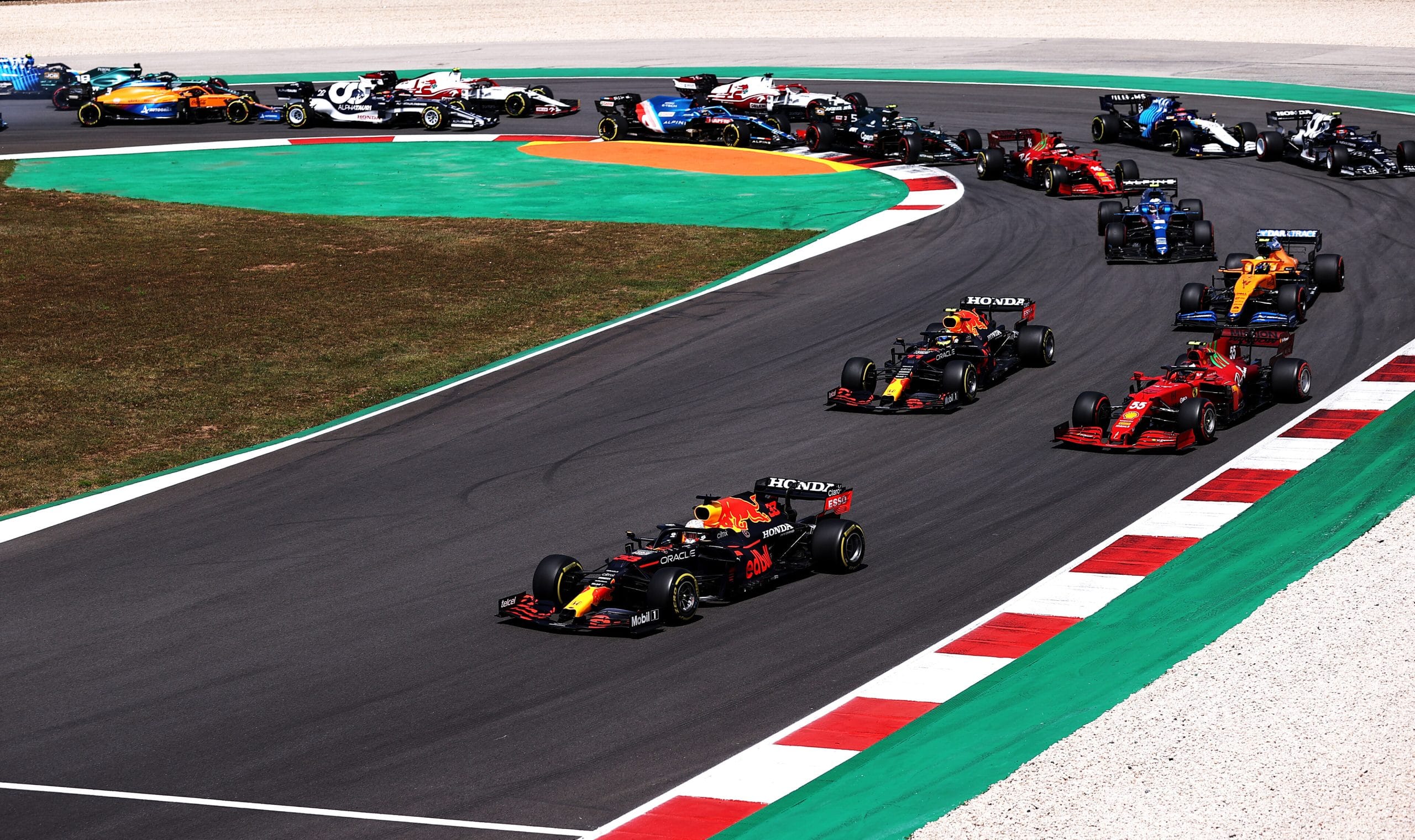

Portimao’s back on the Formula 1 calendar. The Portuguese circuit that nobody particularly missed has secured a two-year deal for 2027 and 2028. Because nothing says “solving F1’s calendar crisis” quite like recycling pandemic-era filler tracks whilst countries actually willing to pay proper money get told to wait their turn, does it?
The Algarve circuit hosted two races during COVID chaos. Lewis Hamilton won both in 2020 and 2021. Then it vanished when proper races returned. Now it’s back because Zandvoort’s departing after 2026 and F1 needed someone to fill the European slot without upsetting their delicate rotational calendar mathematics.
When Your Government Pays the Bill for “Prestige”
Portugal’s Prime Minister Luis Montenegro pushed hard for this comeback. The Portuguese government, Turismo de Portugal, and promoter Parkalgar struck the deal with Formula 1. Which is lovely corporate synergy for everyone involved except taxpayers wondering why public money’s funding billionaire racing whilst hospitals need equipment.
Manuel Castro Almeida, Portugal’s Minister of Economy, delivered the expected platitudes about putting Portugal “back on the F1 map.” Because nothing screams economic development quite like hosting two weekends of racing that’ll generate tourism revenue for approximately five days whilst draining public coffers for the privilege.
“Portugal is back on the Formula 1 map. The F1 Grande Prémio de Portugal will have a direct impact on economic activity, generating opportunities throughout the economic chain.” – Manuel Castro Almeida, Minister of Economy and Territorial Cohesion
Translation? The government’s paying a fortune to F1 for hosting rights, hoping tourism income eventually justifies the expense. Spoiler: it probably won’t.
Stefano’s “Highest Demand Ever” Speech Returns
F1 CEO Stefano Domenicali rolled out his standard press release language about being “delighted” that Portimao returns. The circuit supposedly “delivers on-track excitement from the first corner to the chequered flag.” Which is generous wording for two races that were perfectly forgettable except Hamilton breaking Michael Schumacher’s win record in 2020.
“The interest and demand to host a Formula 1 Grand Prix is the highest that it has ever been.” – Stefano Domenicali
There it is. Domenicali’s favourite line. Interest is “the highest it’s ever been.” He’s deployed that phrase for every single calendar announcement since 2022. Rwanda wants in. Thailand’s been negotiating for years. South Korea’s interested. But sure, let’s prioritise a Portuguese track that barely registered with fans during its COVID stint.
The Rollercoaster Layout Everyone Pretends to Love
Jaime Costa, the circuit’s CEO, described Portimao’s “unique rollercoaster layout” that will “challenge the best drivers in the world.” Fair enough. The 4.6km track features dramatic elevation changes and that spectacular plunge toward the final corner. Drivers enjoyed it during those pandemic races.
But let’s not pretend this is Spa-Francorchamps. It’s a decent circuit built in 2008 that hosted exactly two F1 races before being dropped. Now it’s back because geography and government funding aligned whilst F1’s calendar reaches maximum capacity under current regulations.
Thailand and Rwanda Can Sit Down, Apparently
Here’s the uncomfortable question F1 won’t address. Why Portugal instead of genuinely new markets? Thailand’s been working on a Bangkok street race for years. Target date? 2028. Rwanda’s made serious overtures about hosting Africa’s return to F1. Interest from South Korea remains strong.
But F1’s chosen to recycle a European circuit that already had its moment rather than expand into territories that would actually grow the sport’s global footprint. Safe choice. Boring choice. Entirely predictable choice.
The 24-race calendar limit creates brutal competition for slots. Zandvoort’s gone after 2026. Barcelona’s contract expires the same year with their future uncertain. Spa moves to rotation starting 2027, disappearing in 2028 and 2030. Imola’s already been replaced by Madrid for 2026.
That leaves minimal room for new venues. Portugal gets 2027 and 2028. Then what? Does Barcelona return? Does Thailand finally breakthrough? Do Rwanda’s ambitions get buried under European protectionism disguised as “tradition”?
The Contract Expiry Game Nobody’s Winning
Check the contract dates across F1’s calendar. It’s a proper mess of expirations creating constant uncertainty. Las Vegas runs until 2027. Mexico and Singapore through 2028. Suzuka ends 2029. Shanghai, Baku, Abu Dhabi, and Brazil all expire 2030.
Meanwhile, newer deals stretch decades. Red Bull Ring somehow secured a contract through 2041. Bahrain runs to 2036. Monaco, Montreal, Madrid, and Melbourne all signed through 2035. Silverstone and Austin are safe until 2034.
The result? Constant calendar reshuffling where established European races get priority whilst emerging markets fight for scraps. Portugal’s two-year deal reflects F1’s unwillingness to commit long-term to any circuit that isn’t paying absolutely obscene hosting fees.
When Rotation Means “We Can’t Decide”
Spa’s rotational contract represents F1’s solution to overwhelming demand. Can’t fit everyone? Make Belgium race every other year. Problem solved. Except it’s not solving anything. It’s just spreading dissatisfaction across multiple countries whilst protecting the sport’s ability to maximise revenue by playing circuits against each other.
Portugal’s deal explicitly isn’t part of Spa’s rotation. Which means from 2027 onward, the calendar looks something like this: Spa appears 2027, disappears 2028, returns 2029, vanishes 2030, comes back 2031. Portugal runs 2027 and 2028, then who knows. Barcelona’s future past 2026 remains completely unclear.
What a delightfully chaotic system for circuits trying to plan infrastructure improvements and promotional campaigns years in advance.
The “Historic” Grand Prix That Never Really Mattered
F1’s press materials emphasise Portugal’s “prestigious history” in the sport. Fair enough. The country hosted its first Grand Prix in 1958. Monsanto Park and Porto street circuits featured in racing’s early decades. Estoril ran races from 1984 to 1996, producing some memorable moments.
Ayrton Senna won his first F1 race at Estoril in 1985. Proper history there. But Portimao? Two pandemic races. Hamilton wins. That’s the entire legacy. Now it’s being marketed as some grand return of tradition when really it’s just convenient scheduling that happens to involve Portugal.
Only Hamilton’s won at Portimao among current drivers. Which will be properly irrelevant by 2027 when he’s either retired or still touring around in Ferrari wondering which pedal makes the car go forward. The grid will be completely different. The cars will be unrecognisable under new regulations. But sure, let’s pretend historical continuity matters.
When Two Years Becomes Forever (Or Nothing)
Portugal’s locked in for 2027 and 2028. What happens after? Nobody knows. Nobody’s saying. F1’s become expert at short-term deals that create constant uncertainty whilst allowing them maximum flexibility to chase whatever country offers the biggest cheque next.
Perhaps Portugal performs brilliantly and extends. Perhaps Thailand finally gets their Bangkok race and pushes Portimao back into obscurity. Perhaps Rwanda makes genuine progress and F1 decides African expansion actually matters more than recycling European circuits.
Or perhaps nothing changes. Portugal keeps paying. Thailand keeps waiting. Rwanda keeps hoping. And F1’s calendar remains the same collection of venues it’s been for years, just shuffled around enough to create the illusion of progress whilst protecting established interests.
At least the drivers enjoyed Portimao during those COVID races. That’s something. More than you can say for certain other recent calendar additions that prioritised money over racing quality. Will 2027’s return deliver the same enthusiasm? Time will tell. Assuming anyone remembers to care by then.